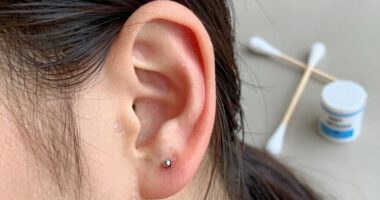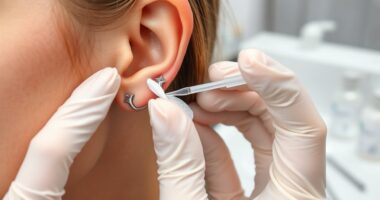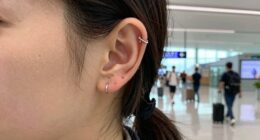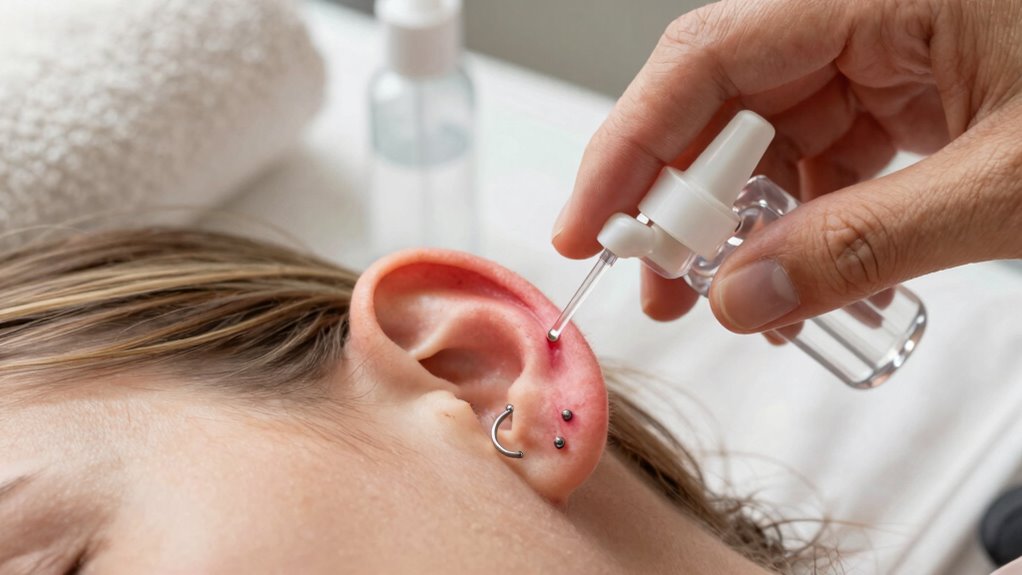

To keep a healing piercing from taking over your routine, stick to simple daily care like cleaning with saline or fragrance-free cleanser twice a day, and avoid harsh chemicals. Keep your hands clean before touching the area and avoid excessive twisting or touching. Wear loose clothing, stay away from irritants, and protect the piercing from dirt and sweat. Consistency is key—if you keep up with these tips, you’ll learn more ways to make healing smoother and less disruptive.

Get beauty and skincare favorites delivered free with Prime
- Fast, free delivery on millions of items
- Prime Video, Amazon Music and more included
- Member-only deals all year
Key Takeaways
- Incorporate daily cleaning into your routine at set times to maintain consistency without it feeling overwhelming.
- Use gentle, fragrance-free products and avoid excessive touching or twisting of the jewelry.
- Keep your environment clean and avoid irritants like hair products or cosmetics near the piercing.
- Wear loose, breathable clothing to minimize friction and irritation during healing.
- Practice patience, sticking to the aftercare routine, and avoid unnecessary manipulation of the piercing.
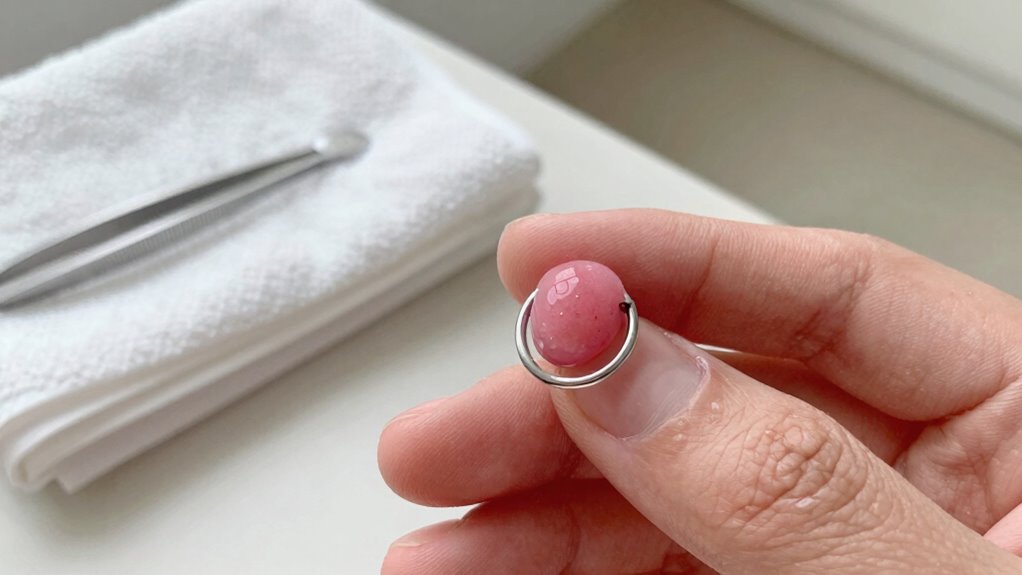
Healing a new piercing can feel like it’s taking over your daily routine, but with the right care, you can keep it manageable. The key is to establish simple, consistent piercing aftercare habits that don’t disrupt your day. When you’re diligent with your piercing aftercare, you’ll reduce the risk of infection and promote faster healing. Make it a point to clean your piercing twice a day with a saline solution or a gentle, fragrance-free cleanser recommended by your piercer. Avoid harsh chemicals like alcohol or hydrogen peroxide, which can irritate the skin and delay healing. Keep your hands clean before touching the jewelry or the piercing site to prevent introducing bacteria.
Consistently clean your piercing twice daily with gentle solutions to promote healing and prevent infection.
Jewelry maintenance is equally important during healing. Guarantee your jewelry is secure but not too tight, allowing for proper airflow and reducing pressure on the piercing. If your jewelry feels loose or uncomfortable, don’t try to adjust it yourself—visit your piercer for professional assistance. During cleaning, gently rotate or move the jewelry to prevent it from sticking to the tissue, but avoid excessive twisting that can cause irritation. Keep an eye on any swelling, redness, or discharge, and don’t hesitate to reach out to your piercer if you notice signs of infection or prolonged discomfort. Proper jewelry maintenance**** is crucial for preventing complications and ensuring a smooth healing process.
Managing your routine involves planning around your piercing’s needs without letting it dominate your day. For example, avoid sleeping on the fresh piercing or exposing it to unnecessary dirt, sweat, or irritants. If you exercise regularly, take care to clean and dry the area thoroughly afterward, especially if you’re sweating heavily. Be cautious with hair products, cosmetics, or skincare that could come into contact with the piercing, as these substances can cause irritation or clog the piercing site. Wearing loose, breathable clothing can also help minimize friction and irritation. Incorporating biodiversity into your awareness can help you understand how environment and hygiene impact your healing process. Additionally, paying attention to environmental factors can significantly influence the healing timeline and success. Being aware of air quality and humidity levels in your surroundings can further support optimal healing conditions.
Finally, remember that healing times vary depending on the location and individual, but patience is essential. Stick to your piercing aftercare routine consistently, and don’t pick or scratch at the piercing. By staying attentive to jewelry maintenance and keeping your routine straightforward, you’ll find that caring for your new piercing becomes a manageable part of your day rather than an obstacle. With careful, gentle attention, your piercing will heal properly and look great for years to come.
Products Worth Considering

Oura Ring 4 Smart Ring – Silver – Size 8

OMRON VIVA 360+ Body Composition Monitor and Smart Scale

Withings Sleep Under-Mattress Sleep Tracking Pad
As an affiliate, we earn on qualifying purchases.
Frequently Asked Questions
Can I Wear Makeup Around a Healing Piercing?
Yes, you can wear makeup around a healing piercing, but you should be cautious. When applying makeup, use gentle techniques to avoid touching or contaminating the piercing. Opt for makeup that can serve as a temporary piercing concealment, like mineral or non-comedogenic products, and apply it carefully with clean brushes or tools. Always remove makeup thoroughly at night to prevent irritation and infection, promoting proper healing.
How Do I Sleep Comfortably With a New Piercing?
To sleep comfortably with a new piercing, choose sleeping positions that avoid putting pressure on the piercing, like sleeping on your back. Use pillow support to keep your head elevated and prevent accidental bumps or twisting. Avoid sleeping on your side or stomach, as these positions can irritate or delay healing. With proper pillow support and mindful sleeping positions, you’ll reduce discomfort and help your piercing heal smoothly.
Is It Safe to Exercise During Healing?
Exercising during piercing healing requires careful caution. While some movement might be tempting, it’s best to pause physical activity to prevent pain, swelling, or infection. Follow your piercing aftercare instructions diligently and consider exercise precautions like avoiding sweaty workouts or high-impact routines. Prioritize protection and patience—pause, prevent, and promote healing. Your piercing’s proper care guarantees a smooth, speedy recovery, letting you get back to your workout routine safely and swiftly.
What Should I Do if My Piercing Gets Infected?
If your piercing gets infected, you should act quickly. Start with proper piercing aftercare by gently cleaning the area with saline solution twice daily. Avoid touching or twisting the jewelry to prevent further irritation. If redness, swelling, or pus persists, see a professional piercer or healthcare provider. They can prescribe antibiotics if needed. Remember, infection prevention is key—keep the area clean, dry, and avoid unnecessary trauma to promote healing.
When Can I Change My Jewelry After Healing?
Did you know that most piercings take about 6 to 8 weeks to heal? You can usually change your jewelry after this healing timeline, but it’s best to wait until your piercing is fully healed to avoid complications. When you’re ready, gently swap out your piercing jewelry, making sure it’s clean. If you experience any pain or swelling, hold off and consult your piercer before making changes.
Conclusion
As you navigate your daily routine, it’s almost poetic how a little mindful care keeps your piercing healing smoothly. Coincidentally, by sticking to simple cleaning habits and avoiding unnecessary touch, you seamlessly integrate healing into your life without it taking over. Ultimately, patience and consistency turn what once felt like an inconvenience into a quiet proof to your care and resilience. In the end, your routine and healing journey effortlessly intertwine, proving that sometimes, the smallest habits make the biggest difference.