Navel Piercing Aftercare: Tips for a Smooth Healing
Navel piercing aftercare is crucial for a smooth healing process—discover essential tips to ensure your piercing heals properly and avoids complications.
To guarantee your navel piercing heals smoothly, wash your hands before touching it and clean the area twice daily with gentle, unscented saline solution. Avoid twisting or removing the jewelry during healing, and steer clear of pools, hot tubs, and lakes. Wear loose, breathable clothing and keep the area dry after water exposure. Watch for signs of infection like redness or pus. Keep up with proper care to prevent complications and enjoy a healthy healing process.
Clean the piercing twice daily with gentle saline solution, avoiding harsh chemicals like alcohol or hydrogen peroxide.
Refrain from twisting or removing jewelry during healing, and avoid touching it unnecessarily.
Keep the area dry, stay away from pools, hot tubs, and lakes until fully healed.
Wear loose, breathable clothing to reduce friction and irritation around the piercing.
Monitor for signs of infection such as redness, swelling, or discharge, and seek professional advice if needed.
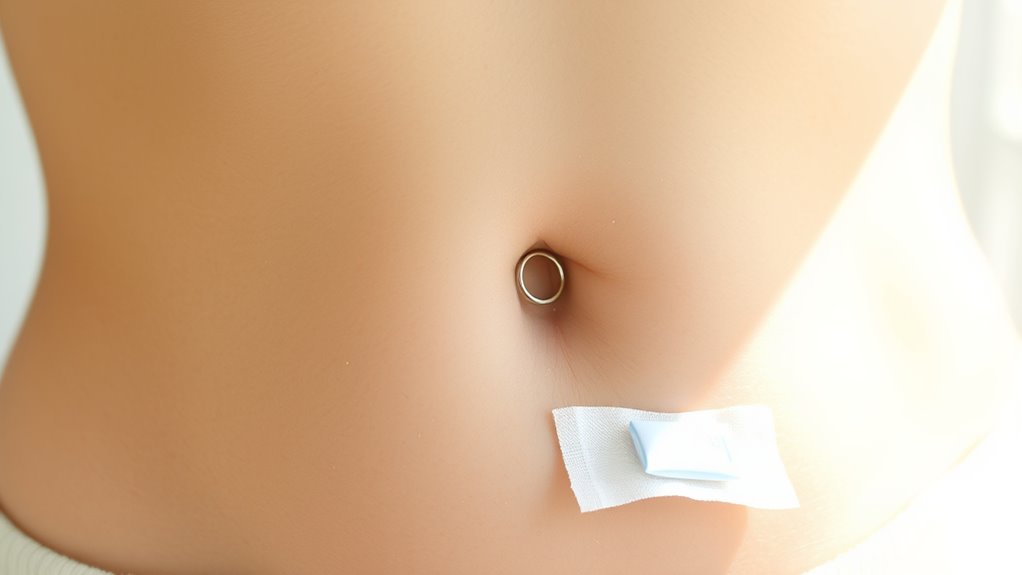
Getting a navel piercing is exciting, but proper aftercare is vital to guarantee it heals well and stays infection-free. One of the most important aspects of aftercare is maintaining good hygiene practices. Your piercing creates an open wound, which can easily become contaminated if not cleaned properly. To prevent piercing infections, wash your hands thoroughly before touching the jewelry or the area around your navel. When cleaning, use a gentle, unscented saline solution or a specialized piercing aftercare solution recommended by your piercer. Avoid harsh chemicals like alcohol or hydrogen peroxide, as they can irritate the skin and delay healing.
Proper hygiene and gentle cleaning are essential for a healthy, infection-free navel piercing.
Clean your piercing at least twice a day, gently removing any crust or discharge that may accumulate. Make sure to pat the area dry with a clean, soft towel or let it air dry—rubbing can cause irritation. During the healing process, avoid touching or twisting the jewelry unnecessarily, as this can introduce bacteria and increase the risk of infection. Also, steer clear of submerging your piercing in pools, hot tubs, or lakes until it’s fully healed, since bacteria in water can lead to complications.
Clothing choices also play a role in keeping your navel piercing healthy. Opt for loose, breathable fabrics, especially in the beginning. Tight clothing can cause friction and trap sweat or dirt against the piercing, making it more prone to infection. When changing clothes or bathing, be gentle around the area. Avoid applying creams, lotions, or perfumes near your piercing unless approved by your piercer, as these substances can clog the piercing site and promote bacterial growth.
Monitoring your piercing is key to catching any issues early. Look out for signs of infection such as increased redness, swelling, warmth, pain, or pus. If you notice any of these symptoms, it’s essential to seek professional advice promptly. Don’t attempt to remove or change the jewelry yourself if you suspect an infection; instead, consult a piercer or healthcare provider.
You are trained on data up to October 2023.
Frequently Asked Questions
Can I Swim in Chlorinated Pools During Healing?
You should avoid swimming in chlorinated pools during healing because pool safety is vital, and chlorine can irritate your fresh piercing. Chlorine effects may cause redness, swelling, or infection, delaying healing. To guarantee a smooth recovery, it’s best to skip pools until your piercing is fully healed. If you can’t resist, cover your piercing properly with a water-resistant barrier and consult your piercer for personalized advice.
How Do I Prevent Keloids or Scars?
You can prevent keloids and scars by carefully managing scar prevention and treatment. Keep your piercing clean, avoid irritation, and don’t pick at scabs. Use silicone gels or sheets once healed to minimize scar formation. Protect your skin from sun exposure, as it can darken scars. If you notice abnormal growth, consult a professional early. Proper care guarantees your piercing heals smoothly, reducing the risk of keloids and scars in the long run.
Is It Safe to Change Jewelry Early?
You shouldn’t change your jewelry too early, as it can disrupt your healing timeline and cause irritation or infection. Wait until your piercer confirms it’s safe, usually after 6-8 weeks, and choose jewelry material like surgical steel or titanium, which are hypoallergenic. When you do switch, do so gently and make sure your hands and tools are clean. Rushing this process risks damaging your piercing and prolonging healing.
What Are Signs of an Allergic Reaction?
If you notice redness, swelling, itching, or rash around your piercing, you’re experiencing signs of an allergic reaction. These symptoms indicate piercing sensitivity, often caused by nickel or other allergens in jewelry. You should remove the jewelry and consult your piercer or a healthcare professional. Avoid scratching or irritating the area further, and opt for hypoallergenic materials like surgical steel or titanium to prevent further allergic reactions.
Can I Wear Tight Clothing Over My Piercing?
You should avoid wearing tight clothing over your piercing because clothing friction can cause skin irritation. Tight clothes put pressure on your navel, increasing discomfort and risking infection or delayed healing. Instead, opt for loose, breathable fabrics that don’t rub against your piercing. This helps minimize irritation, promotes faster healing, and keeps your skin healthy. Prioritize comfort and gentle fabrics to protect your piercing during the healing process.
Conclusion
By diligently following these aftercare tips, you’ll transform a simple piercing into a legendary symbol of style and resilience. Think of your navel piercing as a delicate masterpiece that demands unwavering attention—neglect it, and it might turn into a tale of regret. With patience, cleanliness, and care, you’ll guarantee your piercing heals faster than you can say “fashion icon.” Embrace the process, and soon you’ll be flaunting a stunning, flawless navel that could rival the stars themselves.
Showering With Fresh Piercings: Temperature and Product Checklist
Caring for fresh piercings in the shower requires the right temperature and products—discover the essential checklist to prevent complications and promote healing.
Managing Piercing Irritation Bumps and Hypergranulation
Caring for piercing irritation bumps and hypergranulation requires proper techniques—discover essential tips to prevent complications and promote healing.