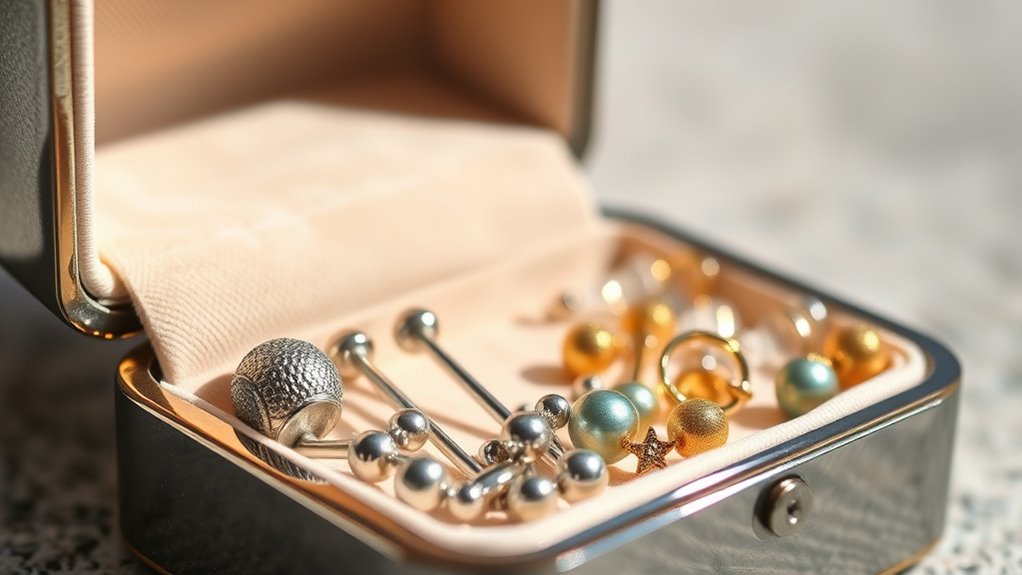
A piercing glossary helps you understand key terms like “flush,” which means the jewelry sits evenly with the skin, or “swell,” referring to swelling during healing. Knowing words such as “healing process,” “infection,” and “maintenance” guarantees you communicate effectively with professionals and care for your piercing properly. Familiarity with these terms can prevent complications and improve your healing experience. Keep exploring these definitions—more insights await to help you navigate your piercing journey confidently.
Key Takeaways
- Understand common piercing terms like “flush,” “swell,” and “piercing site” to communicate effectively with professionals.
- Familiarize with jewelry-related terminology such as “stud,” “barbell,” and “hoop” for proper maintenance and selection.
- Learn about healing-specific words like “rejection,” “irritation,” and “infection” to recognize complications early.
- Know definitions of materials like “surgical steel,” “titanium,” and “niobium” for safe jewelry choices.
- Recognize key process terms such as “healing timeline” and “aftercare” to ensure proper piercing care.
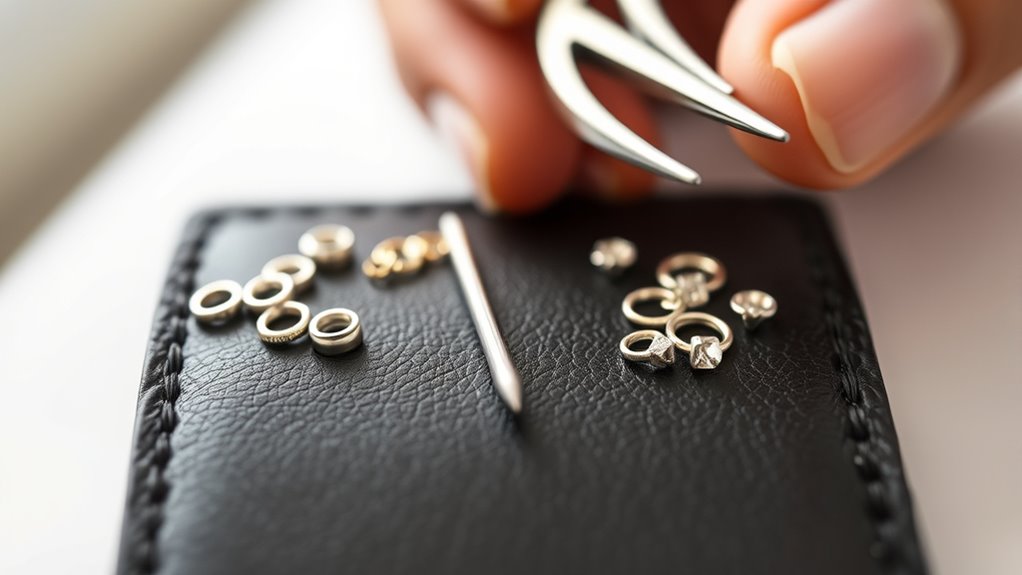
Are you new to body piercing and feeling overwhelmed by the terminology? Don’t worry—you’re not alone. Navigating the world of piercings can be confusing at first, especially when it comes to understanding the healing process and jewelry maintenance. The healing process is crucial because it determines how your body responds to the piercing and how quickly it heals. During this time, your body works to reject or accept the jewelry, so proper care is essential. You’ll want to keep the area clean to prevent infection and avoid touching or twisting the jewelry unnecessarily, as these actions can delay healing or cause irritation.
Jewelry maintenance is another key aspect you’ll need to understand. It involves caring for your piercings and the jewelry itself to ensure they stay in good condition and don’t cause complications. After getting pierced, your jewelry is more than just a decorative piece; it’s a vital part of the healing process. Choosing the right jewelry material, such as surgical steel, titanium, or niobium, helps reduce the risk of allergic reactions and promotes faster healing. During the healing period, regular jewelry maintenance includes cleaning with sterile solutions, checking for loose or damaged jewelry, and ensuring the jewelry remains in good condition. If your jewelry develops a buildup of crust or debris, gentle cleaning with saline solution can help prevent infection and keep the piercing healthy. Recognizing signs of infection early can prevent more serious complications and ensure proper healing.
Understanding the terminology also means knowing what to expect and when to seek professional advice. For example, if you notice excessive swelling, pain, or discharge, these could be signs of an infection that needs prompt attention. Similarly, knowing what ‘flush’ or ‘swell’ means can help you communicate more effectively with your piercer or healthcare provider. Be aware that some piercings may take several weeks to months to fully heal, depending on the location and your body’s individual healing response. During this period, avoid removing or changing jewelry unless advised by a professional, as this can disrupt the healing process and lead to complications.
Frequently Asked Questions
What Are Common Healing Times for Different Piercings?
For piercing recovery, healing duration varies depending on the piercing type. Earlobe piercings typically heal in 6-8 weeks, while cartilage piercings may take 4-6 months. Navel piercings often need 6 months, and tongue piercings usually heal in 4-6 weeks. To guarantee proper healing, follow your piercer’s aftercare instructions, keep the area clean, and avoid unnecessary touching or trauma during the healing process.
How Do I Choose the Right Jewelry Material?
When choosing jewelry material, you want options that are safe, durable, and comfortable. Look for high-quality metals like surgical steel, titanium, or niobium, which suit various piercing styles and skin sensitivities. Consider jewelry sizing carefully to ensure a perfect fit that minimizes irritation and promotes healing. Prioritize hypoallergenic options, and avoid cheap or mixed metals to guarantee your piercing stays healthy and looks great.
Are There Risks Associated With Certain Piercing Types?
Yes, there are risks associated with certain piercing types. You should be aware of risk factors like infection, allergic reactions, and scarring. To mitigate these, choose experienced piercers and follow proper aftercare. Complication prevention is key—keep the piercing clean, avoid touching it, and follow all healing instructions. Being informed about potential risks helps you make safer choices and ensures your piercing heals well and looks great.
How Can I Prevent Infections After Piercing?
Worried about infection after your piercing? You can prevent infections by following proper piercing aftercare and infection prevention tips. Keep your piercing clean with gentle saline solutions, avoid touching it with dirty hands, and steer clear of irritating substances. Do you really want to risk complications? Regularly clean and monitor your piercing, and consult your piercer if you notice redness or unusual swelling. Staying vigilant guarantees a smooth, safe healing process.
What Should I Do if My Piercing Gets Infected?
If your piercing gets infected, act quickly by following proper piercing aftercare. Clean the area gently with saline solution and avoid touching it with dirty hands. Look for signs of infection such as swelling, redness, pain, or pus. If symptoms worsen or persist, see a professional piercer or healthcare provider promptly. Don’t ignore these signs; timely care helps prevent complications and promotes healing.
Conclusion
Now that you know the piercing terms, you might wonder if some styles are just trends or timeless. Honestly, history shows body art has always reflected personal and cultural identity, making it more than just a fad. Whether you’re adding a simple stud or a bold ring, your piercing is a form of self-expression that’s been around for centuries. So, trust your instincts, embrace your style, and wear your piercing with confidence—you’re part of a long, vibrant tradition.