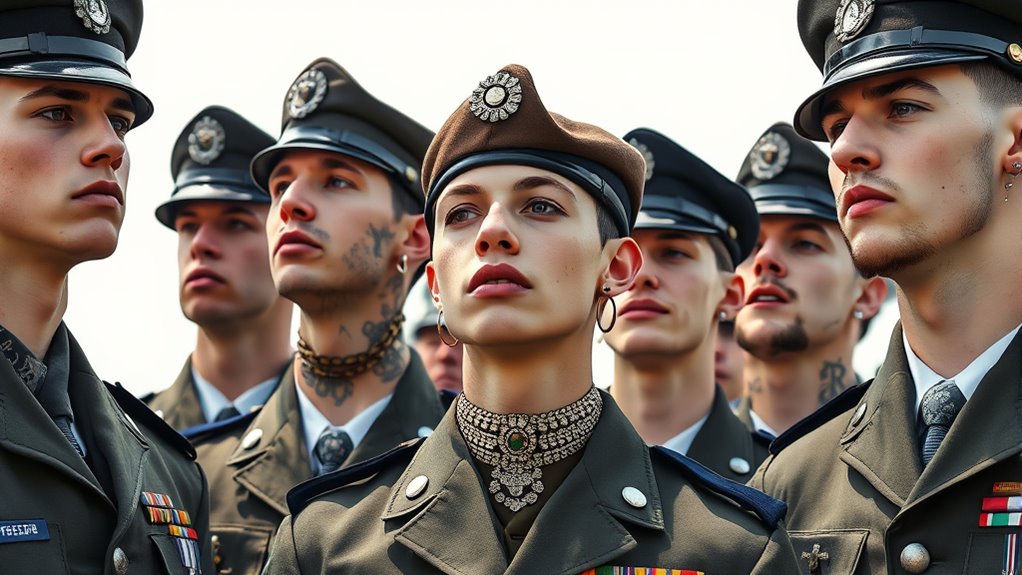

Across the globe, military regulations generally restrict piercing to maintain discipline, professionalism, and a uniform appearance. Many armed forces prohibit visible facial piercings or excessive jewelry, requiring personnel to cover or remove piercings during duty. These rules vary by country, but overall, they aim to prevent distractions, safety issues, and signals of individuality that could undermine cohesion. If you want to know more about specific countries’ policies, keep exploring how standards differ worldwide.
Key Takeaways
- Many countries’ military forces restrict visible facial piercings to maintain discipline and uniformity.
- Regulations often prohibit tattoos or piercings depicting offensive symbols or imagery.
- Female service members may have more leniency for discreet piercings, but visible ones are generally discouraged.
- Safety concerns and operational professionalism drive restrictions on piercings during active duty worldwide.
- Standards vary, with some nations allowing personal expression in non-combat roles while maintaining strict grooming in combat units.
Piercings can be a personal form of expression, but in the military, they often clash with strict regulations designed to maintain uniformity and professionalism. Military institutions prioritize a cohesive appearance, which is why they enforce specific grooming standards and tattoo policies that often restrict or prohibit visible piercings. These rules exist to foster discipline, unity, and a sense of order among service members, making personal adornments like piercings a point of contention or concern.
Piercings clash with military standards aimed at discipline, unity, and a professional, uniform appearance.
When it comes to tattoo policies, most military branches impose limitations on tattoos that are visible while in uniform. Many consider tattoos that depict offensive imagery, symbols, or messages incompatible with the professional image they’re aiming to project. Some countries or branches even restrict certain styles or placements of tattoos, especially those that might be deemed inappropriate or distracting during duty. These policies are often linked to grooming standards, which emphasize a neat, tidy, and uniform appearance. The goal is to eliminate any deviation that could undermine the disciplined image of the armed forces.
Piercings, especially facial ones like nose rings, eyebrow rings, or multiple earrings, are generally viewed as incompatible with the strict grooming standards upheld by most military organizations. Many branches ban visible piercings during duty to ensure all personnel present a consistent and professional appearance. Soldiers are often required to remove jewelry or cover piercings before duty or official events. Some militaries have more lenient policies for female service members, allowing discreet piercings that are hidden beneath uniforms, but even these are often discouraged during official functions. Additionally, grooming standards promote a uniform appearance that minimizes distractions and emphasizes discipline. The rationale behind these restrictions is rooted in the desire to prevent distractions and maintain a focus on discipline and respectability. Personal style choices, like piercings, are seen as potential sources of distraction or as signals of individuality that could undermine unit cohesion. Furthermore, in combat or operational settings, having visible piercings or tattoos that don’t adhere to standards might pose safety concerns or be misinterpreted by allies or enemies.
Frequently Asked Questions
Are There Any Exceptions for Cultural Piercings in the Military?
Yes, some military branches offer cultural exceptions and religious exemptions for piercings. You might be allowed to keep certain piercings if they hold cultural or religious significance. However, policies vary widely, and you’ll need to request approval through proper channels. Be prepared to provide supporting documentation, and understand that approval isn’t guaranteed, as safety and uniform standards often take precedence over personal or cultural expressions.
How Do Regulations Differ Between Officers and Enlisted Personnel?
You notice the clear line between officers and enlisted personnel when it comes to regulations, with officers often held to stricter standards. Higher rank distinctions mean officers usually face more disciplinary measures for non-compliance, including piercings that clash with uniform policies. Enlisted members might have slightly more leniency, but rules still govern appearance. You understand these differences emphasize discipline and professionalism across all ranks, maintaining order and respect within the military structure.
Can Military Personnel Get Piercings During Leave?
During leave, you can generally get piercings, but you must consider your military’s uniform standards and dress code. If the piercings are visible and violate regulations or could be mistaken for dress code violations, you might face restrictions or disciplinary action upon return. Always verify your branch’s specific policies beforehand, as regulations vary, and avoiding issues ensures you stay in compliance with military standards.
What Is the Penalty for Violating Piercing Regulations?
If you violate piercing restrictions, you face disciplinary actions, which can range from counseling to more severe penalties like reprimands or even administrative separation. The military enforces strict grooming standards to maintain discipline and uniformity. When you ignore these regulations, you risk not only penalties but also jeopardize your reputation and standing within your unit. Always adhere to piercing regulations to avoid such consequences and uphold military discipline.
Do Regulations Vary Between Combat and Non-Combat Roles?
Yes, regulations do differ between combat and non-combat roles. In combat roles, uniform standards are stricter, often prohibiting visible piercings to guarantee safety and discipline. Non-combat roles may permit more flexibility, but disciplinary actions can still be enforced if regulations are breached. You need to adhere to the specific guidelines for your role, as failure to do so can lead to penalties or other disciplinary measures.
Conclusion
So, next time you consider a piercing, remember that in some armies, even a tiny stud could land you in hot water. While you might think it’s just a fashion statement, to military regulations, it’s often a breach of discipline. Ironically, what’s meant to express individuality can turn into a uniform’s strict rule. So, before you poke holes, ask yourself: will it make you stand out or just stand down?