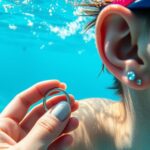
Swimming with new or healing piercings can be risky because chlorine and saltwater may irritate the area and slow down healing. Chlorine dries out your skin and strips natural oils, while saltwater might cause irritation if your piercing isn’t fully healed. Both water types can introduce bacteria, increasing infection chances. To keep your piercings safe, avoid swimming during healing, or take precautions like rinsing thoroughly afterward. Learn more about protecting your piercings in water environments.
Key Takeaways
- Swimming in pools with chlorine can dry and irritate healing piercings, potentially delaying recovery.
- Saltwater may help clean piercings but can cause irritation if the piercing isn’t fully healed.
- Waterborne bacteria increase infection risk; avoid swimming during initial healing stages.
- Use waterproof barriers or rinse thoroughly after swimming to minimize contamination and irritation.
- Proper aftercare and patience are essential to prevent complications and ensure complete healing.

If you have piercings, swimming can pose some risks that you need to contemplate. Waterborne bacteria, chemicals like chlorine, and saltwater can all interfere with your piercing’s healing process and increase the chance of infection. Understanding how these elements affect your piercing helps you make safer choices and protect your health.
Swimming with piercings risks infection from bacteria, chlorine, and saltwater; proper care and timing are essential for healing.
When your piercing is still healing, it’s especially vulnerable. Chlorine found in most pools can dry out your skin and irritate the pierced area, which may slow down the healing process. Similarly, saltwater might seem gentle—after all, many sea swimmers find it soothing—but it can still cause irritation if your piercing isn’t fully healed. During the healing process, your body is working hard to create new tissue, and exposure to harsh chemicals or contaminated water can disrupt this delicate phase. This disruption not only prolongs healing but also opens the door for bacteria to enter, increasing infection risk. Preventing infection involves keeping your piercing clean and avoiding exposure to unclean water until it’s fully healed, which typically takes several weeks.
Infection prevention is *essential* whenever you consider swimming with a fresh or healing piercing. Chlorine, while used to disinfect pools, can strip away natural oils and moisture from your skin, leaving your piercing vulnerable. Over time, exposure may cause dryness, cracking, or peeling, all of which compromise the barrier your skin provides against bacteria. Saltwater, on the other hand, can sometimes help clean the piercing naturally, but if your skin isn’t fully healed, it can be too harsh. When you swim, bacteria from the water can latch onto your pierced tissue, especially if your skin isn’t properly sealed. That’s why it’s recommended to wait until your piercing is completely healed before swimming in chlorinated or saltwater environments.
To protect your piercing, you should avoid swimming during the initial healing phase. If you absolutely must swim, consider covering the piercing with a waterproof barrier or sealant designed for wound protection. After swimming, rinse the area thoroughly with fresh water and gently pat it dry. Keep a close eye on your piercing for signs of infection, such as redness, swelling, or discharge, and consult your piercer or healthcare provider if you notice anything unusual. Remember, patience and careful aftercare are your best tools for ensuring your piercing heals properly and remains infection-free, especially when exposed to chlorinated or saltwater environments.
Frequently Asked Questions
Can Swimming Cause Piercings to Close Prematurely?
Yes, swimming can cause piercing closure if you don’t take proper precautions. Water exposure risks, especially in pools or salty water, can irritate the piercing and increase the chance of infection, which may lead to premature closure. To prevent this, keep your piercing dry and clean before swimming, and avoid exposing it to water until fully healed. Proper aftercare and avoiding water exposure risks help maintain your piercing’s health and longevity.
How Long Should I Wait to Swim After a New Piercing?
You should wait at least 4 to 6 weeks before swimming after getting a new piercing. During this healing timeline, water exposure guidelines recommend avoiding pools, saltwater, and other bodies of water to prevent infection and irritation. Keep your piercing dry and clean during the initial healing phase. Once fully healed, you can typically resume swimming, but always follow your piercer’s advice for ideal healing.
Do Certain Types of Piercings Heal Better With Swimming?
Certain piercings heal better with swimming if you choose high-quality piercing materials like surgical steel or titanium, which reduce irritation. However, the healing environment is essential; freshwater pools or natural saltwater can promote healing if kept clean. Avoid swimming in chlorinated or contaminated waters during initial healing, and always follow your piercer’s advice. Proper materials and a clean environment help guarantee your piercing heals smoothly, even with swimming.
Is There a Difference in Chlorine Versus Saltwater Effects on Piercings?
Imagine your piercing as a delicate boat steering water. Chlorine can cause corrosion, like rust on metal, increasing the risk of irritation or infection, especially if you have a water allergy. Saltwater, on the other hand, may help healing but still irritates some skin types. Overall, saltwater tends to be gentler, but both can impact your piercing’s health, so avoid swimming until fully healed to prevent complications.
What Signs Indicate an Infection From Swimming in Contaminated Water?
If you notice signs of infection after swimming in contaminated water, look for increased redness, swelling, or warmth around your piercing. You might also see pus, a foul odor, or persistent pain. Sometimes, a fever or swollen lymph nodes indicate a more serious infection. Trust your instincts—if symptoms worsen or don’t improve, see a healthcare professional promptly to prevent complications from contaminated water exposure.
Conclusion
As you step into the pool or saltwater, imagine the tiny openings of your piercings exposed to the swirling chlorinated or salty depths. Will they stay pristine or begin to change unseen beneath the surface? Every splash, every dive, could be a turning point—either protecting your piercing’s glow or risking a slow, silent transformation. So, before you jump in, consider what lurks beneath the water’s surface. The choice is yours—will your piercing survive the challenge?