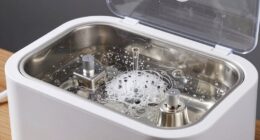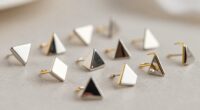
When enjoying water sports like swimming in pools or oceans, it’s best to remove your jewelry to avoid damage from chlorine or salt, which can cause tarnishing or corrosion. If removal isn’t possible, cover piercings with waterproof barriers or choose water-resistant materials like surgical steel, titanium, or niobium to protect both your jewelry and your piercing health. Proper post-swim cleaning and ongoing maintenance help prevent infections and keep your jewelry in good shape—discover how to better protect your piercings and jewelry during water activities.
Key Takeaways
- Use water-resistant jewelry materials like surgical steel, titanium, or niobium to prevent tarnishing and corrosion during water activities.
- Remove non-waterproof jewelry before swimming to avoid damage and reduce infection risk, especially for new piercings.
- Rinse jewelry with fresh water and dry thoroughly after water exposure to eliminate bacteria and prevent corrosion.
- Cover piercings with waterproof barriers or opt for water-safe jewelry when removal isn’t possible.
- Regularly inspect and maintain jewelry to identify and address signs of damage, ensuring piercing health and jewelry longevity.
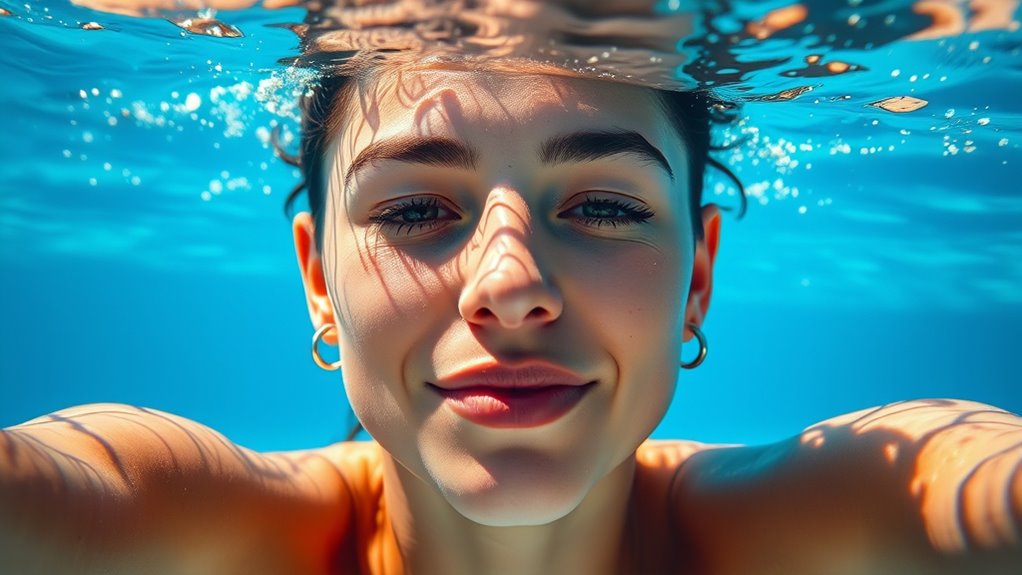
If you have piercings and enjoy water sports, it is essential to understand how these activities can affect your jewelry and your health. Water, whether it’s in pools or oceans, can pose challenges for your jewelry’s integrity and your overall safety. Proper jewelry maintenance becomes imperative to prevent damage and guarantee your piercings stay healthy. Chlorinated pools and salty seawater can cause your jewelry to tarnish, corrode, or weaken over time, making it critical to take proactive steps before diving in. Removing jewelry isn’t always practical, especially if you have piercings that are still healing, so understanding how to protect it during water activities is key.
Water activities can damage jewelry and affect healing; proper care and precautions are essential for safety and longevity.
When you’re in the water, bacteria and other microorganisms are present, increasing the risk of infection if your piercing isn’t properly cared for. Infection prevention should be your top priority, especially because water can introduce contaminants directly into your piercing site. Saltwater and chlorinated water can dry out your skin and jewelry, creating cracks or irritations that make infections more likely. To minimize this risk, you should always clean your jewelry thoroughly after swimming and avoid exposing new piercings to water until they’re fully healed. For healed piercings, rinsing with fresh water and gently drying your jewelry helps remove any residual contaminants.
Additionally, not all jewelry materials are created equal when it comes to water exposure. Metals like surgical steel, titanium, or niobium are more resistant to corrosion and are generally safer for water sports. Avoid wearing jewelry made from cheaper metals or alloys that can tarnish or cause allergic reactions when exposed to moisture. Keeping your jewelry in good condition also involves regular jewelry maintenance—checking for loose settings, scratches, or corrosion, and having any issues addressed promptly. This not only preserves the appearance of your jewelry but also reduces the chances of irritation or infection caused by damaged or degraded pieces.
It’s a good idea to remove jewelry whenever possible before swimming, especially if it’s not water-resistant or meant for active use. If removal isn’t an option, covering piercings with waterproof barriers or using protective jewelry designed for water sports can help. After swimming, always rinse your piercings with fresh water, gently pat them dry, and apply a recommended piercing aftercare solution to keep the area clean and healthy. Taking these precautions ensures that your jewelry remains in good condition, and your piercings stay safe and infection-free. Proper maintenance and cautious water activity habits allow you to enjoy your favorite water sports without compromising your health or jewelry. Proper jewelry material selection can further enhance your water safety practices and prolong the life of your jewelry.
Frequently Asked Questions
Can Chlorine Damage My Piercing Jewelry?
Chlorine can damage your piercing jewelry over time, especially if it causes corrosion or discoloration. To prevent this, you should regularly check your jewelry’s condition and practice proper jewelry maintenance. Use appropriate sterilization techniques to keep your jewelry clean and safe. Avoid exposing your jewelry to chlorinated water for long periods, and rinse it thoroughly afterward to minimize damage and keep your piercing healthy.
How Long Should I Wait After Getting a Piercing Before Swimming?
You should wait at least 4 to 6 weeks after getting a piercing before swimming, giving your healing timeline a head start. During this period, avoid water activities that expose your piercing to bacteria and irritants. Follow water activity tips like keeping the area dry, avoiding pools and oceans, and checking for signs of infection. Patience guarantees proper healing, reduces complications, and keeps your jewelry safe and your piercing healthy.
Are There Specific Jewelry Materials Better for Water Sports?
You should choose jewelry made from water-resistant metals like titanium or surgical steel, as they resist corrosion and damage in water. Hypoallergenic options, such as niobium or platinum, are ideal if you have sensitive skin. These materials help prevent irritation and tarnishing during water sports. Always guarantee your jewelry is secure and designed for active use, so it stays in place and stays looking great while you swim or surf.
What Are Signs of Infection From Water Exposure?
Did you know waterborne bacteria cause over 80% of skin infections after water exposure? If you notice redness, swelling, pain, or pus around your piercing, these are clear signs of infection. Water exposure can introduce bacteria that lead to these symptoms. Keep an eye out for persistent soreness or warmth, as these infection symptoms indicate you should see a healthcare professional promptly to prevent complications.
How Can I Prevent Loss of Jewelry During Water Activities?
To prevent loss of jewelry during water activities, prioritize jewelry security by removing valuables before swimming or using water-resistant designs when possible. Secure piercings with tight, snug jewelry to minimize movement. Consider using waterproof cases or silicone covers for extra protection. Always double-check that your jewelry is properly fastened and fits securely. These steps help keep your jewelry safe, whether you’re swimming in pools or enjoying ocean currents.
Conclusion
To keep your piercings shining like stars in the night sky, always shield them when plunging into pools or ocean waves. Think of your jewelry as delicate treasures, fragile as a butterfly’s wing—protect them from harsh waters and rough waves. With a little care, your piercings will dance with the currents, sparkling brightly through every splash and swell. Dive into water sports confidently, knowing your jewelry is safe and your style stays effortlessly radiant.