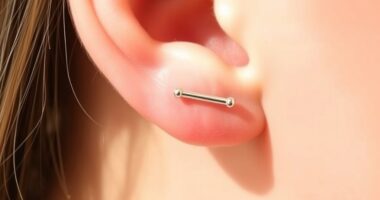
To avoid snagging your piercing while you sleep, try sleeping on your back to reduce pressure and avoid catching jewelry on bedding. Use soft, smooth sheets and wear loose, breathable clothing to prevent fabric from pulling or snagging. Placing a small pillow or soft cloth around the pierced area can also offer extra protection. Keep hair away from your piercing with a headband if needed. Struggling to keep your piercing safe? Keep going for more helpful tips.
Key Takeaways
- Sleep on your back to minimize jewelry pressure and reduce the risk of snagging or trauma.
- Use supportive pillows or travel pillows to keep your head stable and prevent accidental movement.
- Wrap jewelry with a soft cloth or place a piercing pillow around the area for added protection during sleep.
- Wear loose, breathable sleepwear that doesn’t catch or tug on your piercing jewelry.
- Keep bedding smooth and taut, using tightly woven sheets to prevent fabrics from snagging or pulling on piercing jewelry.

Taking proper care of your piercing at night is essential to prevent infection and promote healing. One of the most effective ways to do this is by paying close attention to piercing hygiene and choosing the right sleep positions. How you sleep can substantially impact your piercing’s recovery, so it’s worth making adjustments to avoid snagging or irritation.
Piercing hygiene is key to preventing infection and ensuring your piercing heals smoothly. Before bed, make sure your hands are clean. Gently clean the piercing area with a saline solution or a gentle, fragrance-free cleanser recommended by your piercer. Avoid touching or twisting the jewelry unnecessarily, as this can introduce bacteria or cause irritation. Regular cleaning not only keeps bacteria at bay but also helps you monitor for signs of infection, like redness, swelling, or discharge. When you wake up, check your piercing to see if it’s healing well and hasn’t been disturbed during the night.
Keep your hands clean and gently care for your piercing to prevent infection and support healthy healing.
Sleep positions play a vital role in protecting your piercing. If you sleep on your side or stomach, you risk putting pressure on or snagging your jewelry, which can delay healing or cause injury. To minimize this, try sleeping on your back whenever possible. Using a supportive pillow or a travel pillow behind your neck can help maintain this position comfortably. If you can’t avoid sleeping on your side, consider placing a soft, clean cloth or a specially designed piercing pillow around the area to cushion the jewelry and prevent it from catching on bedding or sheets. This simple step can considerably reduce accidental tugging or trauma.
Another helpful tip is to adjust your bedding. Use smooth, tightly woven sheets and avoid overly loose blankets that can catch on your jewelry. Keeping your bedding clean and free of snags also helps maintain good piercing hygiene. Wearing a loose, breathable sleep shirt or shirt with a soft collar can prevent fabric from rubbing directly on your piercing. If you have multiple piercings, especially in sensitive areas, you might even consider wearing a soft headband or scarf to keep hair away from your ears or face, reducing the risk of pulling on jewelry. Additionally, proper storage of your jewelry in a clean, dry place when not in use can help prevent contamination and damage.
Frequently Asked Questions
Can I Wear a Sleep Mask With My Piercing?
You can wear a sleep mask with your piercing, but it’s important to prioritize ear protection and piercing hygiene. Choose a soft, breathable mask to avoid irritation and gently avoid the pierced area. Make sure the mask doesn’t put pressure on your ear, which could cause discomfort or snagging. Regularly clean your mask and keep your piercing clean to prevent infection and promote healing.
Are There Specific Pillowcases Recommended for Pierced Ears?
When choosing pillowcases for pierced ears, opt for skin-friendly fabrics like silk or satin. These materials reduce friction, preventing irritation and snagging overnight. Avoid rough fabrics like cotton or linen, which can cause discomfort or damage your piercing. By selecting smooth, gentle pillowcases, you help protect your piercing while enjoying a comfortable sleep. Your skin and piercing will thank you for using soft, skin-friendly fabrics each night.
How Do I Prevent Tangling or Pulling During Sleep?
To prevent earring snagging and pillow friction, you should consider sleeping on your back or side with a soft, smooth pillowcase. Avoid tossing and turning, which can pull on your earrings. Secure your earrings with transparent or silicone backs to keep them in place. You can also try wearing a sleep-friendly earring or removing them altogether at night to reduce the risk of tangling or pulling during sleep.
Is It Safe to Use Essential Oils Around New Piercings?
Perfectly pondering piercing safety, you should proceed prudently with essential oils around new piercings. While some essential oils boast healing benefits, many can irritate or infect fresh piercing sites. To guarantee proper piercing healing, avoid applying essential oils directly to your piercing area unless approved by your piercer or healthcare provider. Prioritize cleanliness and caution, and remember, when in doubt, delay applying any oils until your piercing is fully healed.
What Sleep Positions Minimize Discomfort for Facial Piercings?
You should sleep in positions that avoid putting pressure on your facial piercing, like sleeping on your back or side with your face away from the pillow. This helps prevent discomfort and snagging. If you have sleep apnea, consider elevating your head slightly to keep your airway open. Be mindful of eye contact during sleep, and choose a position that minimizes facial contact, reducing stress on your piercing and ensuring better rest.
Conclusion
Now that you know how to keep your piercing safe at night, you can drift into dreams without worry. Think of your piercing as a delicate flower, needing gentle care to bloom brightly. With each mindful move, you’re weaving a shield of comfort around your jewelry, turning sleepless nights into peaceful slumber. Rest easy knowing your nighttime routine is the secret melody that keeps your piercing happy and healthy, ready to shine with every new dawn.