
TL;DR
Beauty companies including Laneige, Laura Mercier, Urban Decay, NYX and Coty experimented with virtual stores, events and staff training as metaverse interest surged. In an excerpt from Cosmetics Business, consultant Nick Vaus says the push lost momentum in part because brands pursued the technology without a clear consumer need; the report’s full expert findings are not available in the supplied material.
Beauty brands’ metaverse push has faded after a period of virtual stores, branded events and digital training, according to a Cosmetics Business report examining what went wrong. In the available excerpt, Nick Vaus, creative director at consultancy Free the Birds, argues that companies moved into the technology without enough attention to whether consumers wanted the experiences or found them useful.

Get beauty and skincare favorites delivered free with Prime
- Fast, free delivery on millions of items
- Prime Video, Amazon Music and more included
- Member-only deals all year
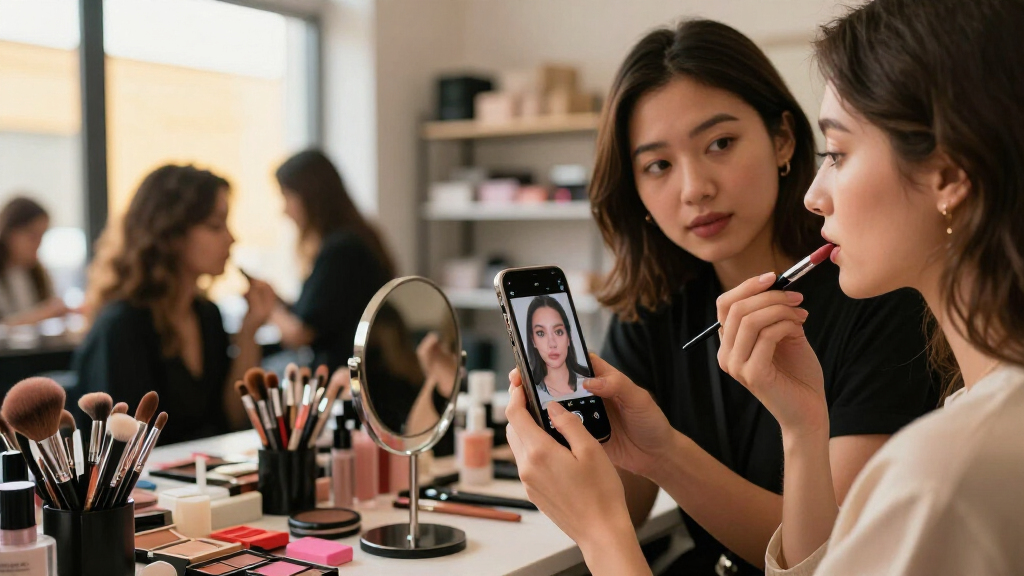
The report recalls a range of beauty-industry experiments during the metaverse boom. Laneige and Laura Mercier opened virtual storefronts, while Urban Decay held a Roblox launch party and NYX staged a Pride parade in a virtual environment. Coty also used metaverse settings for staff training. The examples show that brands treated the technology as more than a marketing channel: they tested retail, events and internal learning.
In 2023, advertising agency Cult launched Metaverse Beauty Week, described in the source as a week-long virtual festival of beauty-focused online events. The report says that, just three years later, the metaverse feels like a distant memory for the sector. It asks why these brand-consumer experiences did not sustain their early momentum.
Vaus says brands were “falling over themselves” to establish a presence, with virtual shops, digital collectables, branded games and virtual influencers presented as future ways to engage customers. His explanation is that technology advanced faster than consideration of consumer behaviour. He says brands sometimes pursued a stated objective rather than designing something that gave users a distinctive, tangible experience. The supplied text is only a small extract of the full report, which is available to Cosmetics Business subscribers.
Consumer Value Shaped Metaverse Trials
The episode matters because it illustrates a gap between brand investment and consumer demand. Virtual storefronts and events can create attention, but the excerpt suggests that novelty alone did not answer the practical question of why people would choose to spend time in those spaces. For beauty companies, that distinction bears on whether digital experiments can support lasting engagement or remain short-lived campaigns.
The examples also span different business uses, from public-facing retail and entertainment to employee training. Their later loss of prominence does not establish that every project failed or that all virtual experiences have disappeared. It does show why brands need to judge each use by its purpose and audience rather than assuming that a popular technology trend will automatically translate into customer interest.
Products Worth Considering

Garmin Venu 4 GPS Smartwatch, 45 mm, Slate with Black Silicone Band

Oral-B iO5 Rechargeable Electric Toothbrush with Visual Pressure Sensor, Travel Case, and 3 Brush Heads (Black)

LEVOIT Vital 200S-P Smart Air Purifier for Large Rooms, White
As an affiliate, we earn on qualifying purchases.
From Virtual Stores to Festival
The metaverse became a prominent subject in beauty-industry discussions several years ago, as companies explored immersive online spaces where users could interact through avatars. The source describes a rush to build a “virtual footprint,” reflecting concern among brands that they might miss a new form of consumer engagement.
Projects took several forms: retail environments from Laneige and Laura Mercier, brand events from Urban Decay and NYX, and Coty’s virtual staff training. Cult’s 2023 festival brought beauty-focused online events together under a single banner. The Cosmetics Business report revisits these initiatives through expert views, but the supplied excerpt includes only Vaus’s comments, not the full range of perspectives.
“Essentially the ‘why’ got lost.”
— Nick Vaus, creative director at Free the Birds
The Full Expert Findings Are Missing
The source provided is explicitly a small extract of a subscriber-only article. It does not include the other experts’ views, data on attendance or repeat use, investment figures, or evidence comparing the performance of individual projects. The supplied material also gives no publication date, beyond placing Metaverse Beauty Week in 2023 and describing the metaverse as less prominent three years later.
It is consequently unclear whether particular experiences were discontinued, moved to other platforms or continued in a less visible form. Vaus’s comments offer one explanation for the slowdown, but the excerpt does not establish that unclear consumer value was the sole cause or show how users themselves assessed the projects.
Whether Brands Return With Clearer Uses
The immediate next step for readers seeking the full range of explanations is the complete Cosmetics Business report, which the source says requires a premium subscription. The available material does not announce a new launch, relaunch or industry milestone.
Any further assessment of beauty’s metaverse activity would need to distinguish between projects that ended and those that changed form, and examine evidence such as participation, repeat visits and business results. For now, the report’s accessible excerpt points to a question for future digital campaigns: what specific value does the experience offer the user?
Key Questions
What did beauty brands do in the metaverse?
According to the Cosmetics Business excerpt, Laneige and Laura Mercier created virtual storefronts; Urban Decay held a Roblox launch party; NYX staged a virtual Pride parade; and Coty ran staff training in a metaverse setting.
What does Nick Vaus say went wrong?
Vaus says brands may have adopted the technology before establishing a clear consumer need. He argues that the focus on building a virtual presence sometimes came ahead of creating an experience people would find useful or distinctive.
Did all beauty metaverse projects end?
The supplied excerpt does not say that every project ended. It describes the metaverse as having faded from prominence but gives no current status for the individual stores, events or training programs.
What is Metaverse Beauty Week?
The source describes it as a week-long virtual festival of beauty-focused online events launched by advertising agency Cult in 2023.
Does the report provide evidence that consumers rejected the experiences?
Not in the supplied extract. Vaus offers an expert view about consumer appetite, but the excerpt provides no audience figures, survey results or project-by-project performance data.
Source: rss