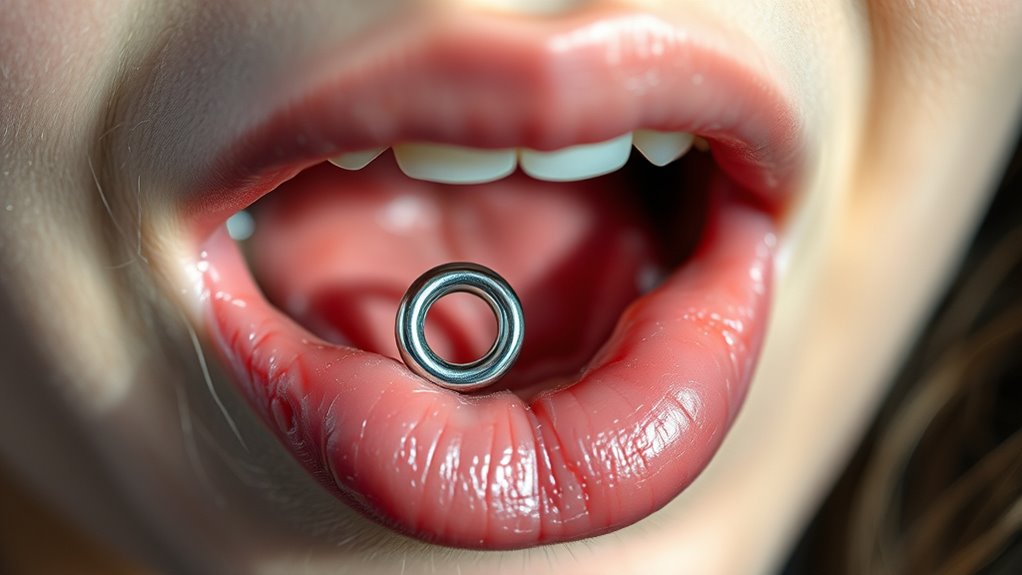

Getting a piercing in your mouth can affect your oral health and speech by increasing the risk of allergic reactions, especially if the jewelry isn’t made from hypoallergenic materials. You may also face infections or tissue damage that can cause pain, swelling, or long-term speech issues. Proper aftercare and choosing the right materials help, but understanding potential complications is key. Exploring further will give you more insights into how to protect your health while enjoying piercings.
Key Takeaways
- Piercings can cause allergic reactions and tissue irritation, impacting overall oral health.
- Metal composition influences allergy risk; hypoallergenic materials reduce adverse effects.
- Oral piercings increase infection risk due to bacteria-rich environment and tissue trauma.
- Infections from piercings may lead to systemic health issues if untreated.
- Proper aftercare and hygiene are essential to prevent complications and support healing.
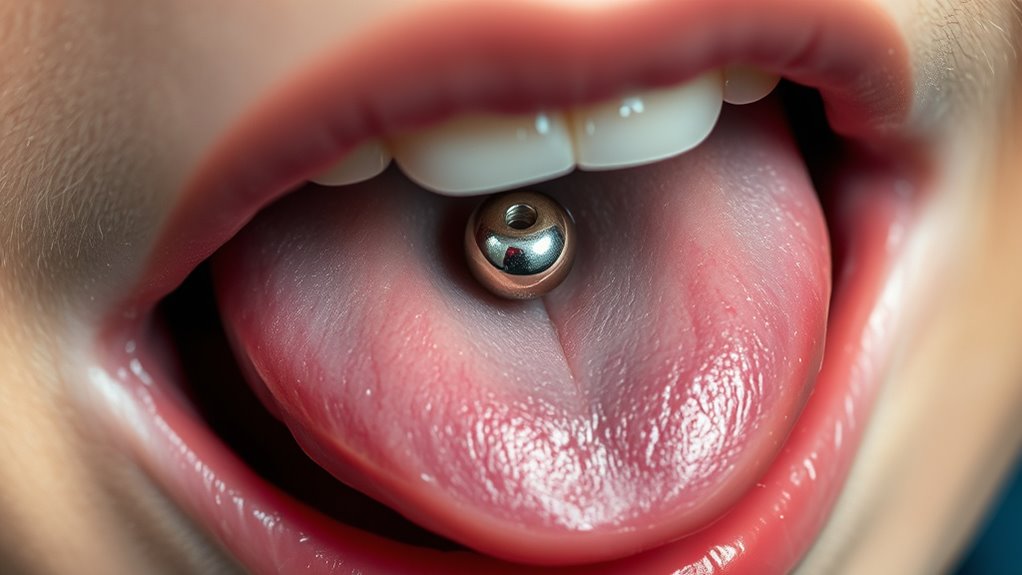
Getting a piercing near or inside your mouth can be a stylish way to express yourself, but it also comes with potential risks to your oral health. One of the most vital concerns is metal allergies, which can cause allergic reactions in some individuals. If you’re allergic to certain metals, such as nickel, getting a piercing with jewelry made from those materials might lead to redness, swelling, itching, or even more severe reactions. It’s essential to choose jewelry made from hypoallergenic materials like surgical steel, titanium, or niobium to minimize these risks. Recognizing early signs of an allergy helps prevent complications that could affect your overall oral health. Additionally, metal composition plays a significant role in whether a piercing will cause an allergic response, making it crucial to verify the materials used.
Infection risks are another serious consideration when deciding to get a mouth piercing. The mouth is teeming with bacteria, so any break in the tissue creates a portal for infection. If proper aftercare isn’t followed, or if the piercing is performed in an unsterile environment, bacteria can invade the wound, leading to pain, swelling, pus, and even more severe infections like abscesses. These infections can spread beyond the mouth, causing systemic issues that require medical attention. Ensuring that your piercing is done by a professional in a clean, sterile setting markedly reduces these infection risks. Additionally, maintaining good oral hygiene after the piercing is essential to keep bacteria at bay and promote healing.

Prjndjw 14G Surgical Steel Nipple Rings Tongue Rings Cartilage Earring Straight Barbell Body Piercing Jewelry for Women Men Length 12MM 14MM 16MM 18MM 22MM BarBell Piercings
- Package Includes: 5 pairs of piercing rings in set
- Available Sizes: 12mm to 22mm lengths, 14G thickness
- Material: Surgical stainless steel, hypoallergenic
As an affiliate, we earn on qualifying purchases.
As an affiliate, we earn on qualifying purchases.
Frequently Asked Questions
Do Piercings Affect Taste or Sensory Perception?
Piercings can affect your taste or sensory perception by potentially causing sensory nerve damage or disrupting your taste buds. The piercing jewelry may irritate or damage nerves that carry taste signals, leading to altered or diminished taste sensations. If the piercing is placed near taste buds or sensory nerves, you might notice changes in flavor perception or sensitivity. Always consider these risks and consult a professional to minimize potential impact.
Can Piercings Cause Long-Term Speech Impairments?
Think of your tongue piercing as a tiny lighthouse guiding your speech. While it might not cause long-term impairments, it can temporarily disrupt your speech articulation. Over time, the piercing may settle, but if you experience persistent issues, it’s wise to consult a professional. Remember, the lighthouse’s beam remains steady only if you guarantee your piercing heals properly and doesn’t interfere with your tongue’s natural movements.
Are There Specific Types of Piercings Safer for Oral Health?
You’ll find that piercings made from jewelry materials like surgical steel or titanium are generally safer for oral health because they’re less likely to cause allergic reactions or infections. Piercing locations such as the tongue or lip might pose more risks, but choosing safer areas like the cheek or avoiding the palate can help. Always opt for high-quality materials and consult a professional piercer to minimize potential issues.
How Do Piercings Influence Saliva Production?
Think of your mouth as a bustling city, where piercings act like unexpected visitors. They can stimulate saliva production, acting as triggers for salivary gland activity, which might be beneficial or uncomfortable. However, they also have the potential to cause salivary gland irritation, leading to excessive or reduced saliva flow. You should monitor how your body reacts and keep your piercings clean to prevent any issues.
Can Oral Infections From Piercings Spread Systemically?
Yes, oral infections from piercings can spread systemically. If bacteria from an infected piercing enter your bloodstream, they can cause oral infection transmission to other parts of your body. This increases systemic health risks like endocarditis or sepsis. To prevent this, you should maintain good oral hygiene, seek prompt treatment of infections, and avoid irritating or contaminated piercings. Proper care helps reduce the chance of infection spreading beyond your mouth.
Conclusion
So, next time you’re thinking of that daring tongue or lip piercing, remember it’s not just about looking cool. Your mouth’s health and your speech might just pay the price for that flash of rebellion. Sure, you’ll turn heads, but don’t be surprised if your words come out a little funny or your teeth start throwing a tantrum. Sometimes, the boldest move is knowing when to keep your piercing dreams in check—your smile will thank you.