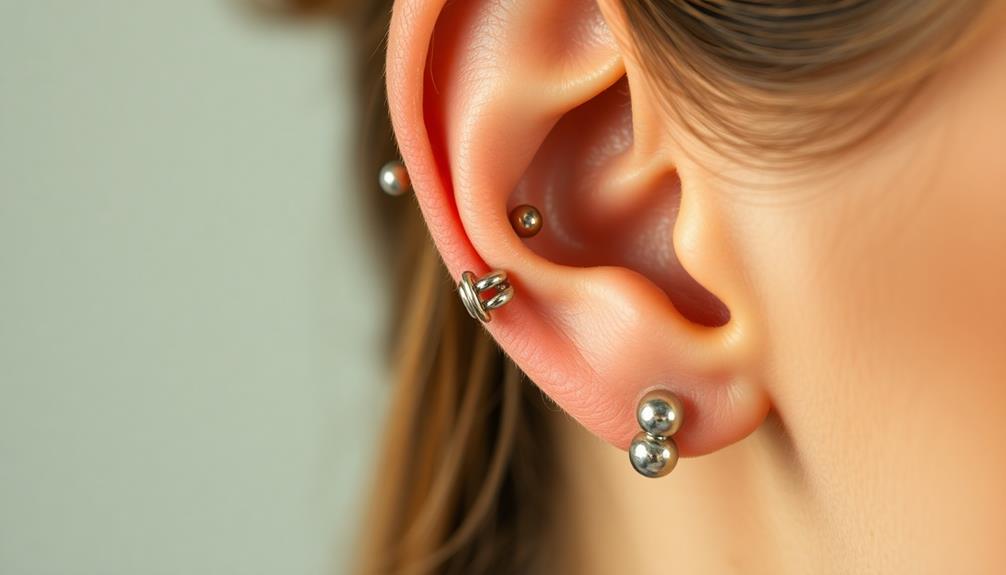
If you have a chronic illness, it’s important to prioritize safety before getting a piercing. Consult your healthcare provider to discuss your health conditions and medications, especially if your immune system is compromised or you’re on blood thinners. Choose a reputable studio that follows strict sterilization practices and has experienced piercers. Be prepared for longer healing times and follow aftercare instructions carefully. To learn more about ensuring a safe piercing experience, keep exploring these important considerations.
Key Takeaways
- Consult your healthcare provider before piercing to assess infection risks and compatibility with your condition.
- Choose a reputable studio with strict sterilization protocols to minimize contamination and complication risks.
- Be aware that healing may take longer due to immune system challenges; plan for extended aftercare.
- Disclose your health issues and medications to the piercer for tailored advice and precautions.
- Follow detailed aftercare instructions carefully to reduce infection risk and support proper healing.

If you have a chronic illness, getting a piercing requires careful planning and consideration. Your health condition can influence the risk of infection, healing process, and overall safety. One of the most important factors is understanding sterilization protocols. A reputable piercing studio should strictly follow sterilization protocols to prevent contamination and infection. This includes using single-use, disposable needles and sterilized tools, as well as maintaining a clean environment. Don’t hesitate to ask your piercer about their sterilization procedures—trustworthy professionals will be transparent and diligent. This step is essential because compromised immune systems or ongoing health issues can increase vulnerability to infections if proper sterilization isn’t followed. Being aware of narcissistic behaviors can also help you better communicate your needs and boundaries with the piercer or support system. Additionally, you should be aware of healing time expectations for your specific piercing. Healing times can vary widely depending on the location of the piercing, your health status, and how well you care for it afterward. For people with chronic illnesses, healing might take longer than average, sometimes extending several months. This delayed healing occurs because your immune response may be weaker or less efficient. Knowing this, you’ll want to plan for extra patience and be prepared for longer periods of care, including avoiding certain activities that could hinder healing or introduce bacteria. Before getting pierced, it’s essential to consult with your healthcare provider. They can offer personalized advice based on your condition, medications, and overall health. For example, if you’re on immunosuppressants or blood thinners, your doctor might advise against certain types of piercings or suggest additional precautions. This step guarantees you’re making an informed decision and minimizes risks associated with your specific health issues. Choosing the right piercing studio is equally important. Look for a studio with excellent reviews and a good reputation for safety and cleanliness. Aside from sterilization protocols, check if the piercers are licensed and experienced, especially in working with clients who have health concerns. Proper aftercare is essential, so make sure the studio provides detailed instructions tailored to your needs. Follow those instructions meticulously to reduce the risk of complications and support your healing process. Ultimately, getting a piercing with a chronic illness isn’t impossible, but it demands extra diligence. By understanding sterilization protocols, setting realistic healing time expectations, and consulting with your healthcare provider, you can make a safer choice. Remember, your health comes first, and taking these precautions ensures that your piercing experience is both safe and satisfying.

BodyJ4You 10PC Piercing Needles 16G – Sterile Disposable Sharp Surgical Stainless Steel – Nose Septum Ear Tragus Helix Labret Nipple Lip Navel
- Package Quantity: 10 sterile piercing needles
- Needle Gauge: 16G (1.2mm)
- Needle Length: 45mm (1 3/4 inches)
As an affiliate, we earn on qualifying purchases.
As an affiliate, we earn on qualifying purchases.
Frequently Asked Questions
Can Piercing Affect Medication Absorption or Effectiveness?
Piercing can affect medication absorption or effectiveness, especially if you get jewelry near injection sites or areas affecting your medication pathways. It might cause absorption disruption or medication interference, altering how your body processes drugs. Be cautious, and consult your healthcare provider before piercing, as they can advise on potential risks and make certain your treatment remains effective. Proper aftercare also helps prevent complications that could impact medication absorption.
Are There Specific Piercings Safer for Immune-Compromised Individuals?
For immune-compromised individuals, choosing piercings with proper sterilization protocols and high-quality jewelry materials like surgical steel or titanium is safer. These materials diminish infection risks and promote better healing. Avoid complex piercings that might prolong healing or increase exposure to bacteria. Always consult with your healthcare provider and a professional piercer knowledgeable about your condition to minimize complications and ensure safe piercing choices tailored to your immune system.
How Do Piercings Impact Blood Clotting or Bleeding Disorders?
Piercings can increase bleeding risk if you have blood clotting or bleeding disorders. You might experience prolonged bleeding or bruising because your blood doesn’t clot properly. It’s essential to consult your healthcare provider before getting pierced, as they can advise if your condition might cause complications. Choosing a professional piercer who understands your health situation helps minimize risks and guarantees proper aftercare to prevent infections or excessive bleeding.
Can Piercings Worsen Symptoms of Autoimmune Diseases?
Piercings can potentially worsen autoimmune disease symptoms by triggering immune responses that lead to flare-ups. When you get a piercing, your immune system reacts to the new injury, which might increase inflammation and cause autoimmune symptoms to intensify. If you have an autoimmune condition, it’s crucial to evaluate how your immune response may be affected, and consult your healthcare provider before getting any piercings to minimize risks.
What Precautions Should Be Taken for Piercings During Flare-Ups?
During flare-ups, it’s wise to pause your piercing plans, as your immune system is already working overtime. Doing so helps reduce infection risk and prevents healing complications. If you must proceed, consult your healthcare provider first, choose a professional piercer with strict hygiene standards, and prioritize gentle aftercare. This approach safeguards your health, minimizes discomfort, and guarantees your piercing journey remains a positive experience.
Conclusion
Just like the hero who navigates challenges with caution, choose your piercings wisely if you have a chronic illness. Your health is your greatest treasure, and every decision matters—think of it as your own epic journey. By staying informed and consulting with healthcare providers, you can avoid unwanted setbacks. Remember, your story is unique; make choices that honor your strength and resilience. Your well-being is the real treasure in this adventure.