Only by understanding proper bloodborne pathogen safety can piercers ensure client safety and avoid costly health risks; learn the essential steps now.
To stay safe from bloodborne pathogens, you must always use single-use, sterile needles for each client and never reuse or share them. Properly dispose of used needles immediately in approved sharps containers, and avoid recapping. Follow strict infection control practices like handwashing, wearing gloves, and disinfecting your workspace regularly. Ensuring equipment is properly sterilized and maintained minimizes risks. To protect your clients and yourself, adhering to these safety steps is essential—discover more ways to stay compliant and safe as you continue your practices.
Always use single-use, sterile needles and dispose of them immediately in approved sharps containers.
Follow strict hand hygiene, PPE use, and workspace disinfection protocols to prevent cross-contamination.
Properly sterilize reusable tools using autoclaving and verify sterilization effectiveness before reuse.
Avoid recapping needles and handle sharps with care to prevent accidental needle sticks.
Regularly inspect equipment for contamination, maintain safety standards, and educate clients on aftercare.
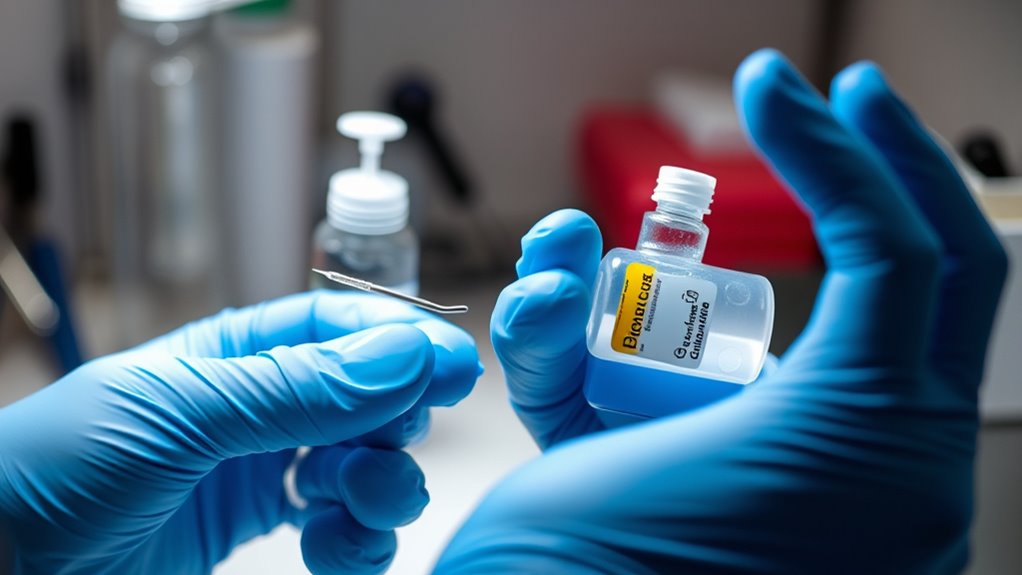
Ensuring bloodborne pathogen safety is essential for piercers to protect themselves and their clients from infections. One of the most critical aspects of this safety is maintaining strict needle safety protocols. As a piercer, you handle needles that can easily transmit bloodborne pathogens like HIV, hepatitis B, and hepatitis C if not managed properly. Always use single-use, sterile needles for each client, and never reuse or share needles under any circumstances. Proper disposal of needles in approved sharps containers is crucial to prevent accidental needle sticks, which pose significant health risks. Before starting any piercing, double-check that all needles and sharps are sterile and sealed. If you notice any damage or contamination, replace them immediately to uphold infection control standards. Your diligence with needle safety not only protects your health but also reassures clients that they’re in safe hands. Additionally, staying informed about Glycolic Acid benefits can enhance your understanding of skin health and aftercare, which is important for client education.
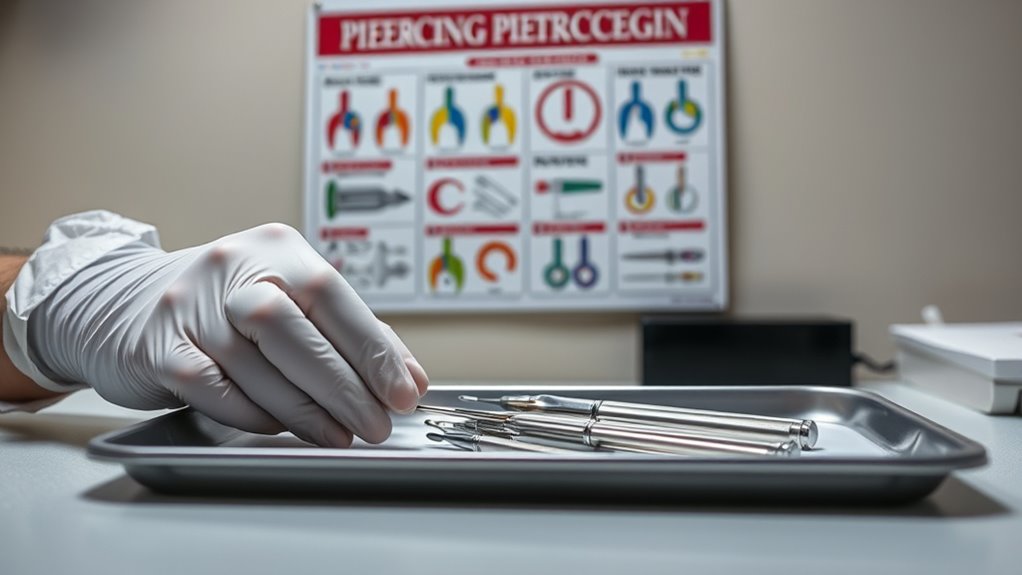
Infection control is a fundamental pillar of your daily practice. It involves more than just handling needles safely; it encompasses an all-encompassing approach to minimizing infection risks. This means thoroughly washing your hands before and after each procedure, wearing appropriate personal protective equipment like gloves and masks, and ensuring your workspace is clean and disinfected. Surfaces, tools, and equipment should be sanitized regularly with EPA-registered disinfectants proven effective against bloodborne pathogens. Sterilization of reusable tools must follow strict protocols, including using autoclaves and verifying sterilization indicators. Maintaining a clean environment reduces the chance of cross-contamination between clients and protects both your health and theirs. Remember, infection control is a continuous process—never cut corners or skip steps, even if you’re in a rush.
Frequently Asked Questions
What Are the Latest Updates on OSHA Regulations for Piercers?
OSHA compliance regulations for piercers have recently been updated to enhance workplace safety. You should stay informed about regulatory updates, especially regarding sharps disposal and personal protective equipment. These changes aim to diminish exposure to bloodborne pathogens and improve safety standards. Make sure your protocols align with the latest OSHA guidelines, including proper training and documentation, to ensure full compliance and protect both yourself and your clients effectively.
How Often Should Piercing Tools Be Sterilized for Maximum Safety?
Ironically, neglecting sterilization frequency could turn your workspace into a health hazard. You should sterilize your piercing tools after each client, ensuring proper equipment maintenance. Regular sterilization, preferably using an autoclave, is essential to eliminate pathogens. Failing to do so risks cross-contamination, infections, and compromised safety. Stay diligent—your clients’ health depends on consistent sterilization practices, making it a non-negotiable part of your routine.
What Are Common Signs of Bloodborne Pathogen Exposure?
If you’ve been exposed to bloodborne pathogens, you might notice symptoms like fever, fatigue, muscle aches, or jaundice. Pay attention to exposure indicators such as unexpected bleeding, skin rashes, or flu-like symptoms developing days after contact. Recognizing these signs early is vital, so always monitor your health closely after potential exposure. Seek medical attention promptly if you experience any symptoms or suspect you’ve been exposed to guarantee proper testing and treatment.
How Can Clients Verify a Piercer’s Bloodborne Pathogen Training?
Think of verifying a piercer’s training as opening a treasure chest of trust. You can request to see their client certification or ask for proof of recent training verification. Skilled piercers proudly display their credentials, showing they’ve sailed through bloodborne pathogen safety courses. Don’t hesitate to ask questions or check credentials; it’s your assurance that safety standards are your guiding star during your piercing journey.
Are There Specific Vaccines Recommended for Piercers?
Yes, piercers should get vaccinated against hepatitis B, as part of their immunization requirements. This piercer vaccination helps protect you from bloodborne pathogens they might be exposed to during procedures. It’s important to verify that your piercer complies with these immunization requirements, ensuring a safer experience. Always ask for proof of vaccination to confirm they’ve taken necessary steps to prevent infection transmission.
Conclusion
By staying vigilant and following safety protocols, you create a shield that keeps bloodborne pathogens at bay. Picture your workspace as a fortress, where gloves, sterilized tools, and careful techniques form an unbreakable barrier. Every precaution you take is like a sturdy wall, protecting both you and your clients from unseen dangers. When you prioritize safety, you’re not just preventing infection—you’re building a sanctuary where trust and health thrive.