Class B vs Class N Autoclaves: The Difference Most New Studio Owners Miss
Understanding the key differences between Class B and Class N autoclaves is crucial for safety and efficiency—continue reading to find out which is best for your studio.
Most new studio owners overlook that Class B autoclaves are more versatile, offering vacuum cycles that thoroughly sterilize complex and porous instruments, making them safer and more reliable. In contrast, Class N models rely on gravity displacement, suitable mainly for solid, unwrapped tools, but less effective for delicate equipment. Choosing the right type is essential for safety, compliance, and long-term cost savings. Keep exploring to understand the key differences and find the best fit for your studio.
Class B autoclaves use vacuum-assisted sterilization, making them suitable for complex, porous, and hollow instruments; Class N rely on gravity displacement.
Proper classification ensures safety, compliance, and prevents damage to delicate tools; confusing the two can compromise sterilization.
Class B units are more versatile, faster, and better for mixed instrument types, while Class N are limited to solid, unwrapped items.
Choosing between them depends on the studio’s instrument types, workload, and safety requirements, with Class B offering higher reliability.
Maintenance and capacity planning are crucial; neglecting these can lead to failures, increased costs, and workflow disruptions.
What Are Class B and Class N Autoclaves, and How Do They Work?
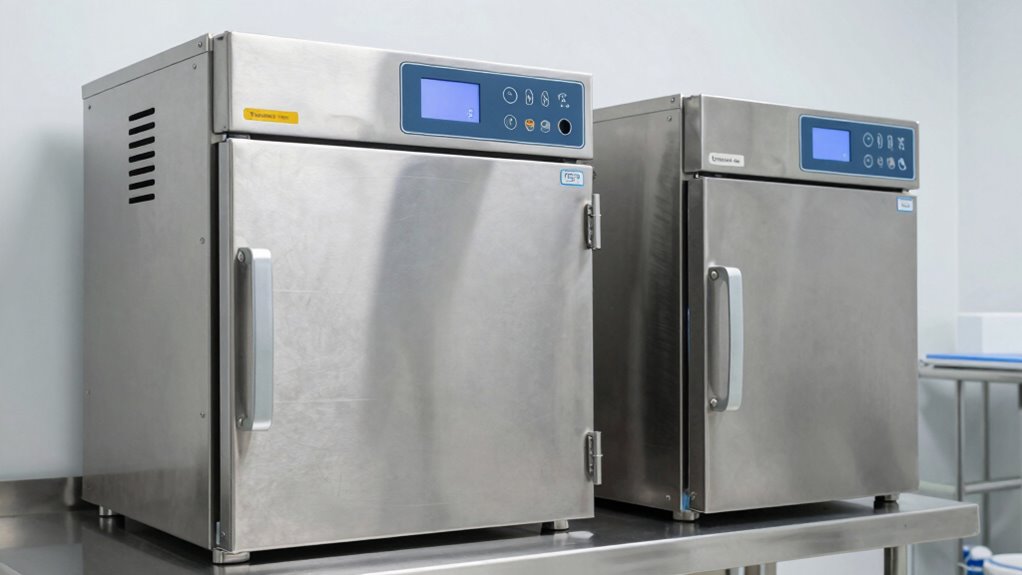
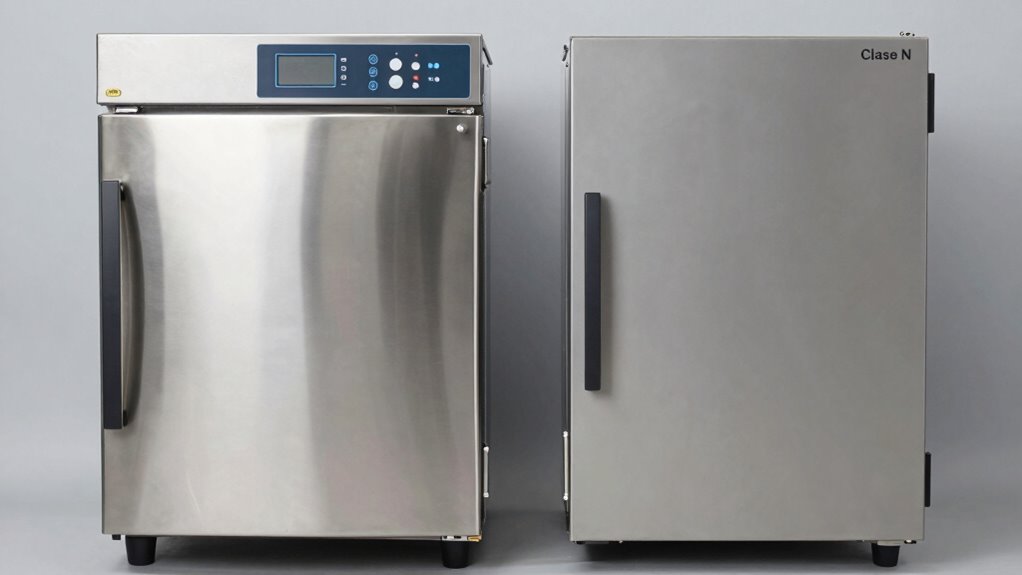
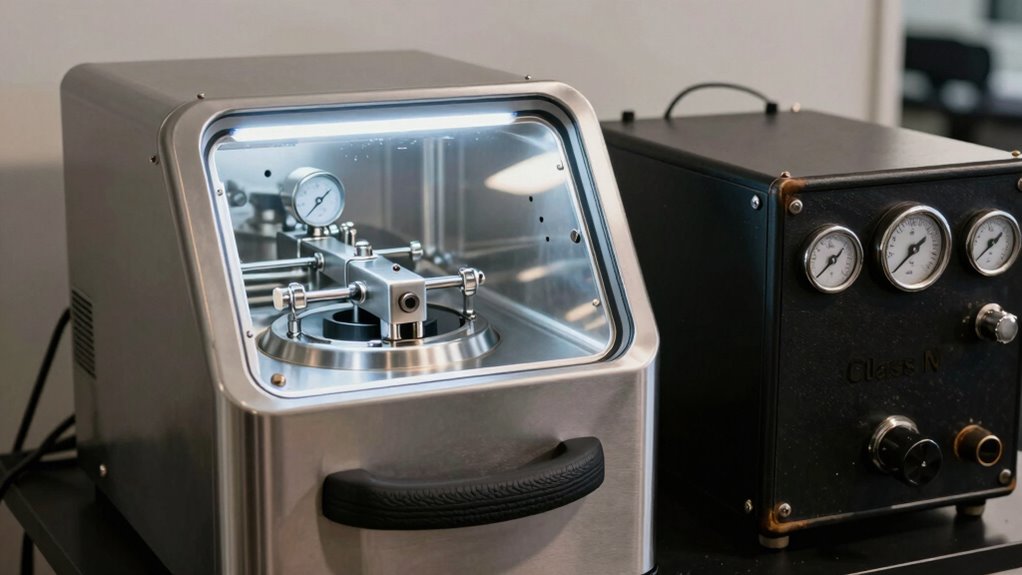
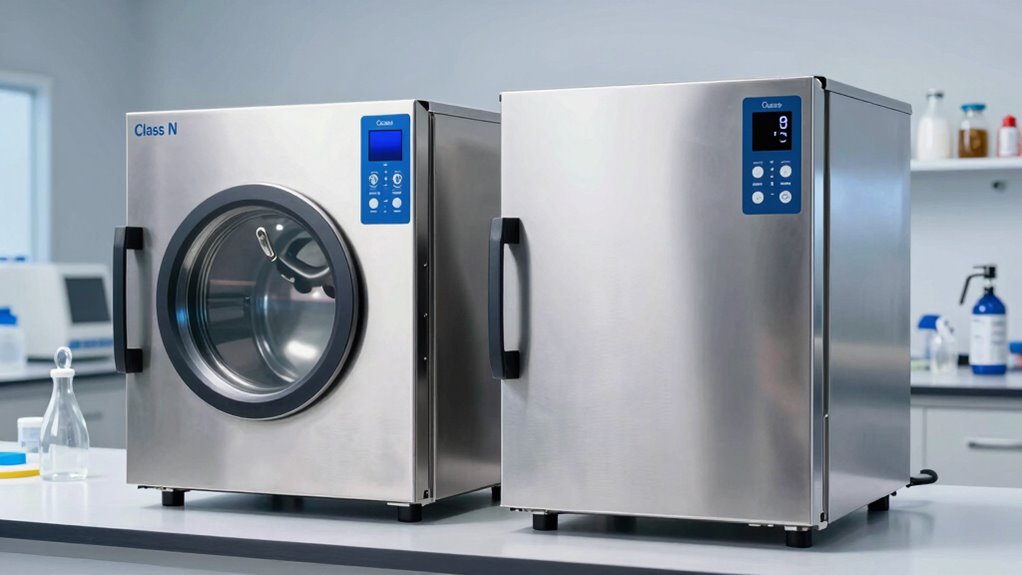
Class B and Class N autoclaves are two common types of sterilization machines used in medical and dental settings. These autoclave types differ in their sterilization methods, which influence how thoroughly they sterilize instruments. Class B autoclaves use vacuum-assisted sterilization, making them suitable for sterilizing complex or hollow instruments. They remove air from the chamber, ensuring steam penetrates all surfaces. Class N autoclaves, on the other hand, rely on gravity displacement, making them faster but less versatile. They’re best for solid, straightforward items. Both types operate by exposing instruments to high-pressure saturated steam, killing bacteria and spores. Choosing between them depends on your sterilization needs, but understanding these autoclave types helps you select the right machine for safe, effective sterilization. Understanding sterilization processes is essential for ensuring compliance with safety standards and optimal instrument sterilization.
Why Does Autoclave Classification Matter for Your Studio?
Choosing the right autoclave classification guarantees you meet sterilization standards and stay compliant with industry regulations. It also guarantees compatibility with your equipment, preventing costly mistakes. Making an informed decision helps protect your studio’s safety and efficiency. Additionally, understanding growth mindset principles can foster a culture of continuous improvement and adaptability within your studio environment. Recognizing the importance of autoclave classification ensures you are aware of how it impacts your sterilization processes and overall safety protocols. Being familiar with different content formats can help you optimize your studio’s workflow and stay ahead in the industry. Incorporating system efficiency tips from related fields can further enhance your sterilization setup and operational reliability. To ensure you select the most suitable autoclave, consider how performance upgrades can improve your sterilization cycle times and overall productivity.
Sterilization Standards Compliance
Understanding sterilization standards is essential because using the right autoclave guarantees your studio meets safety and health regulations. Proper sterilization protocols are critical to prevent infections and ensure client safety. Autoclaves must comply with certification standards that verify their effectiveness in sterilizing instruments. Class B autoclaves, for example, adhere to stringent standards, making them suitable for sterilizing complex and porous items. In contrast, Class N autoclaves may only meet basic requirements, limiting their sterilization capabilities. Choosing an autoclave that aligns with certification standards ensures your studio maintains consistent, reliable sterilization processes. This compliance not only protects your clients but also safeguards your business from legal issues related to inadequate sterilization practices. Additionally, selecting an autoclave with appropriate battery inverter generator capacity can ensure reliable operation during power fluctuations, maintaining sterilization cycles without interruption.
Equipment Compatibility Benefits
Have you ever wondered how your autoclave’s classification impacts the sterilization process and the safety of your studio? The right classification guarantees compatibility with your equipment and tools, preventing damage and ensuring effective sterilization. Class B autoclaves use advanced sterilization technology, making them versatile and compatible with a wider range of instruments, including porous and hollow items. This prevents damage to delicate equipment and extends its durability. In contrast, Class N autoclaves are more limited, suitable mainly for solid, unwrapped instruments. Choosing the correct autoclave classification directly affects equipment compatibility, reducing maintenance costs and downtime. Additionally, understanding the importance of equipment compatibility can help you select a sterilizer that preserves your tools’ integrity while maintaining the highest safety standards in your studio. Being aware of autoclave classifications ensures you make informed decisions that align with your studio’s specific needs and safety regulations.
How Do Class B and Class N Autoclaves Differ in Design and Functionality?
Class B and Class N autoclaves are designed with distinct features that influence their performance and suitability for different sterilization needs. Class B units are equipped with vacuum cycles, enabling them to sterilize a broader range of instruments quickly and thoroughly, enhancing autoclave safety and sterilization speed. In contrast, Class N autoclaves lack vacuum systems, making them ideal for simple, non-porous items. Additionally, understanding water damage is important when maintaining autoclaves to ensure their longevity and proper function.
Feature
Class B
Class N
Vacuum system
Yes
No
Sterilization speed
Faster due to efficient vacuum
Slightly slower, basic sterilization
Instrument compatibility
Wide, including hollow tools
Limited to solid, non-porous items
Autoclave safety
Higher, due to thorough sterilization
Adequate for simple loads
Which Autoclave Class Is Right for Your Studio’s Needs?
Choosing the right autoclave for your studio depends on the types of instruments you need to sterilize and your workflow requirements. If you prioritize autoclave safety and thorough sterilization techniques, a Class B autoclave offers advantages with its ability to sterilize complex tools and porous items effectively. However, if your instruments are simple and your volume is lower, a Class N autoclave might suffice, providing reliable sterilization without extra features. Consider your studio’s size, the variety of instruments, and how frequently you sterilize. Ensuring proper sterilization techniques is essential for safety and compliance. The correct choice guarantees compliance with safety standards, optimizes sterilization techniques, and fits seamlessly into your workflow, helping you maintain a safe, efficient studio environment.
Are Class B Autoclaves Worth the Investment?
Deciding whether a Class B autoclave is a worthwhile investment depends largely on your studio’s sterilization needs and budget. Class B autoclaves offer advanced sterilization technology, guaranteeing thorough sterilization of all instruments, including hollow and complex tools. This enhances autoclave safety, minimizing the risk of cross-contamination. While they come with a higher upfront cost, their efficiency and reliability can save you time and reduce the chance of sterilization failures. If your studio handles high volumes or requires strict compliance with health standards, investing in a Class B autoclave makes sense. However, if your sterilization needs are minimal, a less expensive Class N unit might suffice. Carefully assess your workflow and safety priorities before making a decision to ensure you get the best value for your investment. For those seeking trusted equipment options, researching reputable brands can help ensure durability and performance.
Common Mistakes to Avoid When Choosing an Autoclave
Many people mistake the differences between autoclave classes, which can lead to choosing the wrong type for your needs. You might also overlook your actual capacity requirements or underestimate ongoing maintenance costs. Avoid these mistakes to guarantee you select an autoclave that’s reliable, efficient, and cost-effective in the long run. Understanding the Victorian Steampunk Roleplay etiquette can also help you better appreciate the historical context of these devices and their proper usage.
Misunderstanding Autoclave Classes
Have you ever misunderstood the differences between Class B and Class N autoclaves? Many new studio owners assume they’re interchangeable, but this can compromise autoclave safety and sterilization technology. To avoid costly mistakes, focus on these key points:
Sterilization Capabilities – Class B autoclaves are versatile, capable of sterilizing wrapped, porous, and complex items, unlike Class N units.
Application Needs – Choose based on your sterilization requirements; misjudging this leads to ineffective sterilization.
Legal and Safety Standards – Confirm your autoclave class complies with safety regulations for your specific industry.
Cost vs. Functionality – Don’t opt for cheaper models that don’t meet your sterilization needs, risking safety and compliance.
Understanding these differences helps maintain proper autoclave safety and maximizes sterilization technology.
Ignoring Capacity Needs
Choosing an autoclave without considering your actual capacity needs can lead to serious problems down the line. Proper capacity planning guarantees you can handle your current workload and future growth. Ignoring scalability considerations might force you to purchase a new unit prematurely or cause delays. To avoid this, evaluate your daily sterilization volume and potential expansion. For example, assessing your autoclave size requirements in relation to your current and projected workload ensures you select a unit that aligns with your needs. Additionally, understanding your recovery and HRV goals can help tailor your autoclave choice to support optimal workflow efficiency and health outcomes. Incorporating electric power generation principles can also improve your overall sterilization process by ensuring safety protocols are integrated into your equipment planning.
Overlooking Maintenance Costs
While selecting an autoclave based on capacity is vital, overlooking maintenance costs can quickly undermine your investment. A thorough cost analysis should include ongoing expenses like:
Maintenance frequency—how often it requires servicing.
Part replacement costs—expected expenses for wear-and-tear components.
Labor costs—budget for professional servicing.
Consumables—costs for sterilization supplies and filters.
Additionally, understanding the types of autoclaves can help you better anticipate maintenance differences. Regular monitoring and calibration are essential to ensure consistent sterilization performance and can impact overall maintenance needs. Proper autoclave maintenance procedures can extend the lifespan of your equipment and reduce unexpected breakdowns. Ignoring these factors might lead to unexpected expenses that strain your budget. Class B autoclaves often have higher maintenance frequency and costs compared to Class N models, but neglecting this can be costly in the long run. Always factor in maintenance costs during your initial decision to avoid surprises and guarantee reliable performance.
What Features Should You Look for in a Class B or N Autoclave?
When selecting a Class B or N autoclave, it’s essential to focus on features that guarantee safety, reliability, and efficiency. First, consider the autoclave materials—stainless steel is ideal for durability and easy sterilization. Look for models with advanced sterilization cycles that suit your needs, including options for quick or standard sterilization. Confirm the machine has reliable temperature and pressure controls to prevent failures. An intuitive control panel makes operation smoother, reducing errors. Check for safety features like alarms and automatic shut-offs. Additionally, a transparent door or window helps monitor the process visually. Ultimately, these features work together to ensure your sterilization process is thorough, consistent, and safe, giving you confidence in your studio’s infection control standards.
Tips for Selecting the Best Autoclave for Your Studio
Selecting the right autoclave for your studio requires careful consideration of your specific needs and workflow. Focus on these key factors to make an informed choice:
Choosing the right autoclave depends on your studio’s needs and workflow.
Sterilization effectiveness: Confirm the autoclave reliably sterilizes all instruments, especially if you handle complex or delicate tools. Ensuring consistent sterilization results is crucial for maintaining safety standards and client trust.
Equipment durability: Look for models built with high-quality materials to withstand frequent use and last longer.
Size and capacity: Choose an autoclave that fits your space and meets your capacity needs without overcrowding. Proper sizing helps optimize workflow and storage.
Ease of operation and maintenance: Select user-friendly models with straightforward controls and minimal upkeep requirements.
Balance and ergonomics: Consider models that are designed with ergonomic features to reduce strain during operation and improve workflow efficiency. Ergonomic design can also contribute to overall safety for operators during long sessions.
Prioritize these aspects to guarantee your investment provides consistent sterilization and long-term durability, supporting your studio’s efficiency and safety.
Frequently Asked Questions
Can I Upgrade My Autoclave From Class N to Class B Later?
You can upgrade your autoclave from Class N to Class B later, but it depends on the autoclave’s design and compatibility. Keep in mind, upgrading may involve additional sterilization costs and may require new autoclave materials or fittings to meet Class B standards. Before upgrading, consult with the manufacturer or a specialist to guarantee a seamless shift and maintain effective sterilization practices in your studio.
How Do Maintenance Requirements Differ Between Class B and Class N Autoclaves?
Think of your autoclave as a trusty steed. A Class B requires regular tune-ups to guarantee peak Sterilization efficiency, meaning more frequent maintenance to keep it running smoothly. Meanwhile, a Class N is like a well-trained horse needing less frequent care. Your maintenance frequency differs, with Class B demanding ongoing attention, while Class N is more low-key. Proper upkeep guarantees safe, efficient sterilization every time.
Are There Specific Industry Standards for Class B Versus Class N Autoclaves?
Yes, industry standards differ for Class B and Class N autoclaves. Class B autoclaves meet stricter sterilization efficiency standards, ensuring they effectively sterilize complex instruments, and are compatible with a wider range of equipment. In contrast, Class N autoclaves are more suited for simple, hollow items. You should choose based on your sterilization needs, equipment compatibility, and adherence to standards set by organizations like the CDC and ANSI.
What Are the Safety Considerations Unique to Each Autoclave Class?
While exploring sterilization efficiency, you should prioritize autoclave certification to guarantee safety. For Class B autoclaves, be cautious of complex components and maintain rigorous safety protocols during operation, as their design involves more intricate sterilization processes. For Class N models, focus on proper loading to prevent contamination, and always adhere to manufacturer guidelines. Both require careful handling to safeguard your staff and uphold high sterilization standards.
How Does Sterilization Cycle Time Vary Between Class B and Class N Models?
You’ll notice that the sterilization cycle duration varies between Class B and Class N autoclaves. Class B models typically have longer cycle durations because they perform more thorough sterilization, ensuring higher sterilization efficiency, especially for complex instruments. In contrast, Class N autoclaves have shorter cycle times, mainly suited for simple, unwrapped items. Your choice impacts sterilization effectiveness and workflow, so consider your specific needs carefully.
Conclusion
Choosing between Class B and Class N autoclaves isn’t just a technical decision—it’s the heartbeat of your studio’s safety and success. Think of it as selecting the right key for a lock; one opens doors to trust, the other risks being left out in the cold. By understanding their differences and features, you’ll access the perfect fit for your needs. Don’t just choose an autoclave—choose peace of mind.