
This guide explains how to choose, inspect, organize, and store a body piercing starter kit before supervised training. It is written for beginners comparing kits, apprentices preparing equipment lists, and studio staff checking a new trainee’s supplies. You will finish with a traceable inventory of suitable jewelry, sterile single-use items, protective equipment, and disposal supplies.

Get beauty and skincare favorites delivered free with Prime
- Fast, free delivery on millions of items
- Prime Video, Amazon Music and more included
- Member-only deals all year

TKKUY 153-Piece Body Piercing Kit with Needles and Stainless Steel Jewelry
- ✔ Total Pieces: 153
- ✔ Jewelry Material: 316L stainless steel
- ✔ Needle Sizes: 12G, 14G, 16G, 20G

TKKUY 80PCS Body Piercing Kit – Stainless Steel Jewelry with 12G/14G/16G/20G Needles for Ear, Nose, Lip, Eyebrow
- ✔ Total Pieces: 80
- ✔ Material: 316L stainless steel
- ✔ Needle Gauges: 12G, 14G, 16G, 20G

39-Piece Body Piercing Practice Kit with Silicone Ear and Nose Models
- ✔ Piece Count: 39
- ✔ Practice Models: 4 silicone body parts
- ✔ Needle Count: 25 hollow needles
This is a beginner-level purchasing and preparation task that takes about 45-90 minutes, excluding delivery time. It does not teach you to pierce yourself or another person. Piercing creates an open wound and should be performed by a trained professional in a lawful studio with suitable infection-control procedures.
Difficulty: Beginner | Time: 45-90 minutes
What You’ll Need
Tools & Materials:
- A written equipment list from a reputable piercing course, mentor, or licensed studio
- Access to supplier product pages, invoices, and sterilization records
- Disposable medical examination gloves in suitable sizes
- A compliant sharps container and regulated-waste supplies
- Clean, sealable storage containers reserved for packaged supplies
- A spreadsheet, notebook, or inventory application
- Good lighting for checking packaging, labels, and jewelry surfaces
Knowledge:
- Basic hand hygiene and cross-contamination awareness
- The difference between sterile, disinfected, and visibly clean items
- Local rules governing piercing, apprenticeships, consent, waste, and age restrictions
- Recognition of single-use labels, expiration dates, lot numbers, and damaged sterile barriers
Get your mentor or studio manager’s approval before buying a large kit. Studios may require specific brands, jewelry standards, sterilization records, or waste contractors. A cheap bundle can cost more after unsuitable items are replaced.
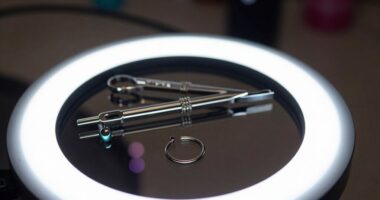
TKKUY 153-Piece Body Piercing Kit with Needles and Stainless Steel Jewelry
<p>This expansive kit stands out for its <strong>wide array of needles and jewelry</strong> suited for many piercing types, from nose to tongue. Its inclusion of durable 316L stainless steel jewelry ensures long-term corrosion resistance, making it ideal for those who want a comprehensive starter experience. Compared with the other options, this kit offers the most pieces, but it also requires a good understanding of sterilization and piercing techniques. It’s a strong choice for those ready to invest in extensive supplies and learn proper procedures, although the limited gloves and basic hygiene supplies mean users must supplement with additional sterilization tools for safe practice.</p>
Pros:
- Includes a vast assortment of needles and jewelry
- High-quality, corrosion-resistant stainless steel jewelry
- Portable reusable case for organization
Cons:
- Only one pair of nitrile gloves included
- Requires advanced knowledge for safe use
- Limited hygiene supplies for sterilization
Best for: Experienced beginners ready to perform multiple piercings with extensive supplies
Not ideal for: Complete novices or those seeking a simple, beginner-friendly practice kit
Bottom line: Best for experienced users needing a comprehensive, all-in-one piercing kit, but safety knowledge is essential.
“Best for experienced users needing a comprehensive, all-in-one piercing kit, but safety knowledge is essential.”
TKKUY 80PCS Body Piercing Kit – Stainless Steel Jewelry with 12G/14G/16G/20G Needles for Ear, Nose, Lip, Eyebrow
<p>This kit offers a <strong>balanced selection of needles, jewelry, and tools</strong> suitable for both beginners and those with some experience. The inclusion of sterilized, individually packaged needles and a variety of piercing jewelry makes it easier to maintain safety standards. Its two disposable clamps, gloves, and cleaning pads add to its professional feel, although the clamps are single-use plastic, which might be a downside for those wanting reusable tools. Compared to the larger kit, this option is more manageable and less overwhelming, but it still supports a wide range of piercings and includes sterilization with E.O. gas, which enhances safety.</p>
Pros:
- Comprehensive set covering many piercing types
- Made from hypoallergenic 316L stainless steel
- Sterilized with E.O. gas and individually packaged needles
Cons:
- Disposable plastic clamps for single use only
- Requires careful handling for safe use
- Needles and tools need proper sterilization and handling
Best for: Intermediate users or beginners aiming for professional-quality supplies
Not ideal for: Complete novices or those seeking a very basic, minimal kit
Bottom line: Ideal for users who want a professional-grade, sterilized kit with a good range of supplies, provided they understand safe piercing practices.
“Ideal for users who want a professional-grade, sterilized kit with a good range of supplies, provided they understand safe piercing practices.”
39-Piece Body Piercing Practice Kit with Silicone Ear and Nose Models
<p>This kit is tailored for <strong>learning and practicing piercing techniques</strong> without risking real skin. Its four silicone models provide a reusable platform for honing skills, with a variety of hollow needles in gauges from 12G to 20G. The inclusion of forceps, gloves, and cleaning pads supports a realistic training environment. However, since it’s primarily designed for practice, it lacks real jewelry or sterile needles for actual piercings, and the absence of a display holder limits its use for jewelry testing or display. This pick makes the most sense for aspiring piercers or hobbyists focused on skill-building rather than performing on actual clients.</p>
Pros:
- Includes multiple silicone models for practice
- Broad selection of needles and forceps
- Supports multiple gauges for versatile training
Cons:
- Display holder not included
- Limited to practice, not real piercing supplies
- Only two gloves included
Best for: Beginners and professionals seeking a safe, reusable training solution
Not ideal for: Those wanting to perform piercings on live skin or looking for a complete starter kit
Bottom line: Excellent for honing piercing skills safely before working on skin, but not suitable for actual piercing procedures.
“Excellent for honing piercing skills safely before working on skin, but not suitable for actual piercing procedures.”
As an Amazon Associate we earn from qualifying purchases.
Before You Start
Safety boundary: Do not use a starter kit to perform an unsupervised piercing at home. Do not practice on yourself, friends, family members, fruit, animal tissue, or any improvised substitute unless a qualified instructor has approved the training method and location.
Check the law where the work will take place. Rules can cover licensing, training, premises, consent, client records, sterilization, biological waste, and jewelry. A product being sold online does not mean it meets local studio requirements.
Treat sterility as a documented condition, not a visual judgment. A clean-looking needle is not sterile. A sealed pouch is not acceptable if the seal is incomplete, the package is wet or punctured, the expiration date has passed, or the sterilization source cannot be verified. Never plan to reuse a single-use needle.
Step-by-Step Instructions
Step 1: Confirm the training and legal requirements
Ask the supervising piercer, course provider, or studio manager for a written list of approved equipment and suppliers. Compare that list with local health, licensing, and waste-disposal rules. Record any requirements for sterile packaging, jewelry documentation, protective equipment, sharps disposal, and instrument processing.
Do this before choosing a commercial bundle. Starter kits are assembled for different markets, and many contain items that a professional studio will not accept.
Tip: If a seller claims that one kit is suitable everywhere, treat the claim cautiously. Piercing rules and studio policies vary by location.
Check: You have a written checklist showing what must be included, which brands or specifications are accepted, and which activities require direct supervision.
Step 2: Build an item-by-item purchase list
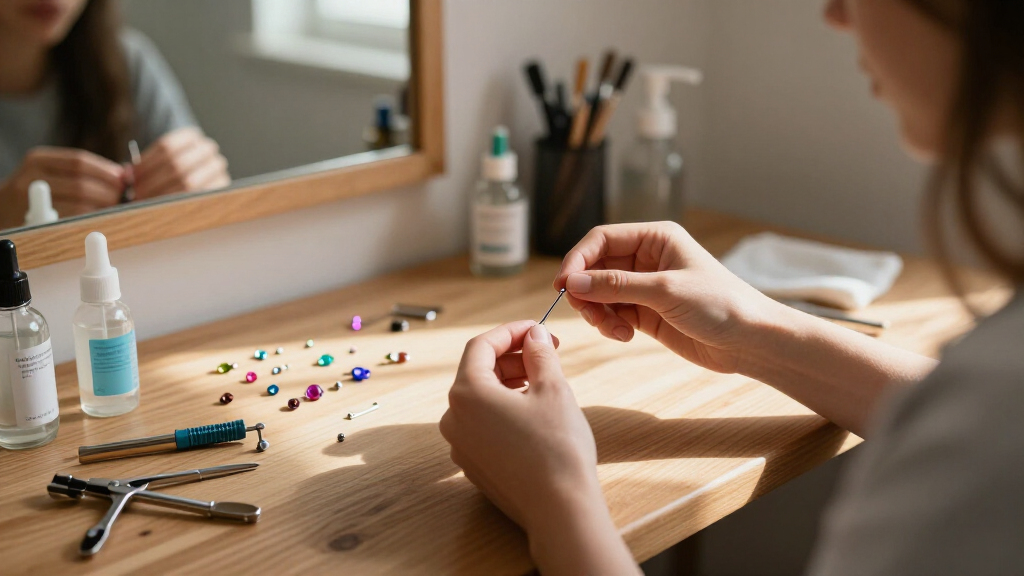
Divide the planned kit into four groups: sterile single-use supplies, reusable equipment, jewelry, and safety or disposal supplies. List every product separately rather than writing only “complete kit.” Add the required quantity, size, material, supplier, lot-record requirement, and storage location.
- Include sterile, single-use piercing needles only when approved by the trainer.
- Include suitable gloves, skin-preparation products, dressings, sterile gauze, and marking supplies specified by the studio.
- Include a closable sharps container before ordering needles.
- Include cleaning and processing equipment only when the studio has a documented procedure for it.
Tip: Avoid buying large mixed assortments. Beginners often receive many unusable jewelry sizes while lacking basic disposal or recordkeeping supplies.
Check: Every planned item has a purpose, specification, quantity, and approved source on your list.
Step 3: Choose a traceable supplier
Buy from a supplier that provides a business identity, contact details, product specifications, return terms, and traceable order records. For sterile products, check for a lot or batch number, expiration date, sterilization method, and intact individual packaging. Ask for documentation when the listing does not provide enough detail.
Reject listings that use vague phrases such as “surgical metal” without identifying the material standard. Also reject loose needles, mystery-brand products, opened multipacks, and items resold without their original labels.
Tip: Save the invoice and product pages. Online listings can change after purchase, while your records may be needed for inventory checks or a product recall.
Check: You can identify the maker or distributor, product specification, purchase date, and batch information for each safety-sensitive item.
Step 4: Select documented body jewelry
Choose initial jewelry only from the materials and manufacturers accepted by the supervising studio. Ask for mill certificates or equivalent material documentation when required. Professional studios commonly use documented implant-grade titanium, suitable niobium, approved grades of steel, or solid nickel-free gold in appropriate applications, but the mentor must approve the exact product.
Choose internally threaded or threadless jewelry with smooth, well-finished wearable surfaces. Do not guess lengths, diameters, gauges, or end sizes. Anatomy, placement, expected swelling, and the studio’s procedure affect sizing. A large assortment is not useful if none of the pieces can be traced or fitted correctly.
Tip: Colored titanium should come from a controlled anodizing process. Painted, plated, or mystery-coated jewelry can chip or expose an unsuitable base metal.
Check: Each jewelry style has a documented material, manufacturer, gauge, wearable length or diameter, thread or pin system, and approved use.
Step 5: Review needles and reusable instruments
Check that any piercing needles are individually packaged, sterile, single use, within date, and supplied in the gauges requested by the trainer. Keep them sealed. Do not test sharpness, touch the point, or open a package for inspection.
Ask the studio which reusable instruments, if any, a beginner should own. Reusable tools need a validated cleaning, packaging, sterilization, storage, and monitoring process. An inexpensive countertop device, boiling water, flame, alcohol, or surface disinfectant does not replace a validated sterilization system. If the studio processes instruments centrally, follow its ownership and labeling rules.
Tip: Do not purchase a piercing gun for body piercing. Also avoid clamps or receiving tubes simply because a bundle includes them; the trainer should select instruments that match the taught method.
Check: All needles remain sealed and traceable, and every reusable instrument has an approved processing route before it enters the kit.
Step 6: Inspect every delivery
Open the shipping carton in a clean, dry area and compare its contents with the invoice. Check outer packaging, sterile barriers, seals, labels, lot numbers, and expiration dates under good lighting. Look for punctures, moisture, stains, crushed packages, corrosion, rough jewelry surfaces, missing parts, and mismatched labels.
Photograph damage before moving the affected items. Place questionable products in a separate container marked “Do not use.” Contact the supplier instead of opening a sterile package to investigate it.
Tip: A color change on process indicator tape or a pouch marker shows exposure to a process; it does not prove that the full load met all sterilization conditions.
Check: The shipment matches the invoice, acceptable sterile barriers are intact, and questionable products are isolated from usable stock.
Step 7: Record and organize the kit
Enter each product in the inventory with its name, quantity, supplier, purchase date, lot number, expiration date, and storage location. Place clean, unopened supplies in closed containers protected from moisture, crushing, dust, sunlight, and frequent handling. Arrange stock by expiration date so the earliest acceptable date is used first during supervised work.
Keep sterile supplies apart from personal items, used tools, chemicals, and waste. Label containers by category rather than pouring products into unmarked bins. Leave manufacturer labels attached wherever possible.
Tip: Do not store sterile pouches under sinks, on the floor, in bathrooms, or in vehicles where moisture and temperature changes can damage packaging.
Check: You can locate any item and match it to its supplier, lot, expiration date, and approved storage category without opening its package.
Step 8: Present the kit for supervised approval
Take the unopened kit, inventory, invoices, and available product documents to the supervising piercer before any item is used. Ask the supervisor to mark each item as approved, rejected, or awaiting documentation. Remove rejected products from working storage and arrange returns when possible.
Use the approved kit only within the studio’s training program. Follow its rules for client screening, consent, setup, skin preparation, jewelry selection, aftercare, exposure response, cleaning, sterilization, and waste. Those procedures cannot be replaced by instructions printed on a retail kit.
Tip: Schedule this review early enough to return unsuitable products within the seller’s return window.
Check: The supervisor has approved the inventory, unresolved items are isolated, and no piercing activity is planned outside the authorized training setting.
Common Mistakes to Avoid
- Buying the largest kit because it appears to offer better value — Compare the contents with the approved item list. Pay for traceable products you will use, not a high item count filled with duplicate tools or unsuitable jewelry.
- Treating sealed packaging as proof of sterility — Check the supplier, label, sterilization information, lot number, expiration date, and barrier condition. Isolate any package that is wet, open, punctured, faded, or poorly sealed.
- Choosing jewelry by appearance alone — Require documented material, smooth finishing, an accepted threading system, and supervisor-approved dimensions. Color, shine, and the word “hypoallergenic” do not provide adequate material traceability.
- Buying needles before arranging safe disposal — Obtain an approved sharps container and confirm the local disposal route before needles enter the workspace. Never place loose needles in household rubbish or recycling.
Troubleshooting
Problem: The kit arrives with damaged or wet sterile packages
Solution: Do not open or use the affected items. Photograph the carton and packaging, record the lot numbers, isolate the products, and request a replacement or refund. Check nearby packages because moisture may have spread through the shipment.
Problem: The supplier cannot provide jewelry material documentation
Solution: Keep the jewelry out of the approved inventory and request written specifications from the manufacturer or distributor. Return it if the material cannot be traced. Do not rely on a marketplace title, magnet test, color, or seller message as proof.
Problem: The studio rejects items after delivery
Solution: Ask the supervisor to state the rejected specification, such as material, gauge, packaging, manufacturer, or processing requirement. Update the purchase list, arrange a return, and buy the approved replacement. Do not keep rejected products mixed with studio stock.
Problem: An item has no readable lot number or expiration date
Solution: Check the original carton and invoice for matching identifiers. If the required information remains unavailable, isolate the item and contact the supplier. Do not invent an expiration date or transfer an unrelated label to the product.
What Success Looks Like
Your starter kit is ready for supervised training when every item appears on an approved inventory, safety-sensitive products have traceable suppliers and batch information, sterile barriers are intact, jewelry materials and dimensions are documented, and a sharps-disposal route is active. Supplies are stored cleanly by category and expiration date. Rejected or uncertain products are visibly isolated. A qualified supervisor has reviewed the kit, and no item is intended for unsupervised piercing.
Next Steps
Book a kit review with the supervising piercer and replace any rejected products before training begins. Add new purchases and lot numbers to the inventory as they arrive. Check package condition and expiration dates at the interval set by the studio, and remove damaged or expired stock immediately.
Complete approved instruction in infection control, bloodborne-pathogen precautions, first aid, consent, anatomy, jewelry fitting, aftercare, exposure response, and local recordkeeping. If no qualified supervisor or lawful training route is available, stop at kit research and arrange piercing services through an established professional studio.
Frequently Asked Questions
Can I use a body piercing starter kit to pierce myself at home?
No. A retail kit does not provide the controlled workspace, supervised technique, client screening, instrument processing, emergency procedures, or waste system used by a professional studio. Use the kit only as part of lawful, supervised training.
What is the most important item in a starter kit?
No single product makes a kit safe. The foundation is an approved system covering traceable sterile supplies, documented jewelry, protective equipment, clean storage, sharps disposal, records, and qualified supervision. Missing disposal or processing arrangements can make otherwise acceptable products unusable.
Are pre-sterilized disposable tools better for a beginner?
They can reduce the amount of reusable equipment that needs on-site processing, but they still require approved suppliers, intact barriers, correct storage, safe handling, and regulated disposal. Let the studio select which disposable tools fit its procedures.
How long can unopened sterile supplies stay in the kit?
Follow the manufacturer’s expiration date and the studio’s event-related sterility policy. Remove a package sooner if it becomes wet, punctured, opened, crushed, contaminated, or otherwise damaged. Storage conditions matter even when the printed date has not passed.
Is a low-cost marketplace kit suitable for apprenticeship training?
Only if every required item meets the studio’s specifications and has acceptable traceability, packaging, and documentation. Many mixed marketplace kits use vague material descriptions or include tools the studio does not permit. Get approval before ordering.
Fall Picks
fall essentials
As an affiliate, we earn on qualifying purchases.