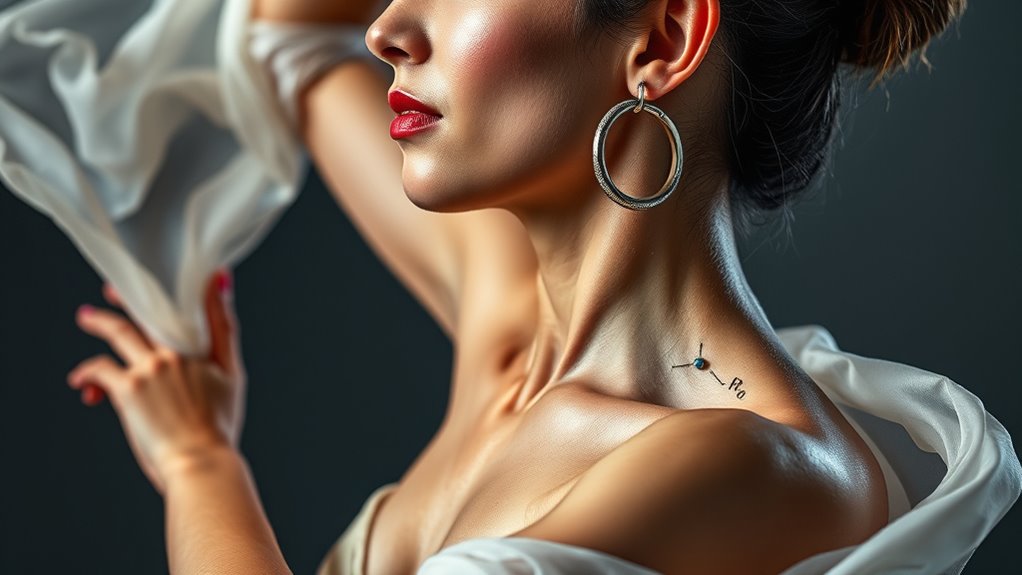
When you dance with piercings, prioritize jewelry hygiene and allow sufficient healing time to prevent infections and injuries. Choose secure, smooth jewelry to reduce snagging risks and avoid movement that tugs on your piercings. Keep your jewelry clean and monitor for signs of irritation. Caring properly helps guarantee your piercings stay healthy, so you can dance confidently and safely. Stay with us to discover more tips for protecting your piercings during movement.
Choose secure, snug jewelry like studs or smooth hoops to prevent snagging or injury during movement.
Regularly clean and disinfect jewelry to prevent bacteria buildup and reduce infection risk while dancing.
Allow sufficient healing time before engaging in intense dance activities to avoid irritation or jewelry displacement.
Avoid dangling or loose jewelry that can catch on clothing or accessories during dynamic movements.
Monitor piercings for signs of irritation or complications, and prioritize healing and hygiene to ensure safe dance participation.
Have you ever wondered how piercings can influence your dance experience? If you’re passionate about movement, it’s essential to consider how jewelry hygiene and piercing healing play a role in your overall performance and safety. When you dance with piercings, maintaining jewelry hygiene isn’t just about looking good—it’s about preventing infections that could sideline you from your favorite moves. Dirty jewelry can harbor bacteria and dirt, which might lead to irritation or infections, especially if your piercing isn’t fully healed. Regularly cleaning your jewelry with appropriate solutions ensures that you’re not introducing harmful bacteria into your piercing site, helping it stay healthy and reducing the risk of complications during intense dance routines.
Piercing healing is another crucial factor to keep in mind. The healing process varies depending on the location and type of piercing, but generally, you want to give your piercing enough time to heal before engaging in strenuous dance activities. Dancing too soon can cause irritation, prolong healing, or even cause the jewelry to migrate or fall out. During the healing phase, it’s best to avoid excessive movement or contact that might tug or snag on your jewelry. This means being mindful of your movements and choosing styles of jewelry that are secure and comfortable. Once healed, you can enjoy dancing with your jewelry more confidently, but even then, regular checks to ensure your jewelry is secure and clean are vital to prevent accidents or infections.
Allow your piercing to heal fully before dancing to prevent irritation and complications.
Another aspect to consider is how jewelry impacts your movement. Loose or dangling jewelry might look stylish, but it can be a hazard on the dance floor. It could catch on clothing or other accessories, or worse, cause injury if it pulls on your piercing. Opt for snug, well-fitting jewelry designed for active lifestyles—such as smooth, seamless hoops or studs—that won’t interfere with your dance steps or cause discomfort. Remember, your comfort and safety should always come first.
Finally, listen to your body. If you notice swelling, redness, or pain, it’s a sign to pause your dancing and check your jewelry. Proper jewelry hygiene and patience during piercing healing help ensure that you can dance freely and safely. Additionally, choosing jewelry made from hypoallergenic materials can reduce the risk of allergic reactions and irritation during movement. By taking these precautions, you’ll protect your piercings and enjoy the rhythm of movement without worry. Your dance journey should be about expression and joy, not pain or complications caused by neglecting your jewelry hygiene or rushing the healing process.
Frequently Asked Questions
How Can Dancers Prevent Jewelry From Causing Injuries During Performances?
To prevent jewelry from causing injuries during performances, you should prioritize costume safety and consider choreographic factors. Secure all jewelry tightly or remove it beforehand, especially pieces that could snag or poke. Opt for simple, non-dangling accessories, and communicate with your choreographers about any jewelry concerns. Planning your costume safety and choreographic considerations guarantees smooth movement and minimizes the risk of accidents or injuries on stage.
What Types of Piercings Are Safest for Dancers?
If you want the safest piercings for dancing, opt for those with quick healing times like earlobe piercings. They’re less likely to cause injuries and typically require minimal jewelry removal during performances. Avoid complex or cartilage piercings that take longer to heal, as they risk damage if jewelry shifts or gets caught. Always follow proper piercing aftercare to guarantee healing, and remove jewelry if any discomfort or swelling occurs during dance.
How Should Dancers Care for New Piercings to Avoid Complications?
To care for your new piercings and prevent complications, follow proper piercing aftercare diligently. Clean the area twice daily with a saline solution and avoid touching or twisting the jewelry. Keep the piercing dry, and avoid submerging it in pools or hot tubs. These steps help infection prevention and promote healing. If you notice redness, swelling, or pain, consult a professional promptly to avoid further issues.
Are There Specific Jewelry Materials Best Suited for Active Dancers?
If you’re an active dancer, hypoallergenic metals like surgical steel or titanium are your best bet, especially for flexible jewelry. For example, a professional dancer wearing silicone or titanium jewelry during rehearsals avoided irritation and injury. These materials reduce allergic reactions and stay secure during intense movements. Opt for flexible jewelry that moves comfortably with you, ensuring safety without sacrificing style or performance.
Can Certain Dance Styles Require Removing Piercings Temporarily?
Yes, some dance styles may require you to remove piercings temporarily for safety. During costume coordination and rehearsal planning, you should consider this to prevent injury or damage. For styles involving intense movement or risky stunts, removing piercings guarantees safety and comfort. Always communicate with your choreographer or costume designer about your piercings beforehand, so they can help you plan accordingly and keep your performance safe and seamless.
Conclusion
As you dance and move, remember that your jewelry can be both a statement and a safety concern. With the right precautions, you can enjoy every twist and turn without worry. But what if the unexpected happens? Will your piercing hold up, or could it lead to a surprise injury? Stay mindful, stay prepared, and keep dancing confidently—your jewelry’s safety might just be the key to opening your best moves yet.
Just exploring how piercing traditions enhance festival celebrations reveals fascinating cultural stories and evolving personal expressions worth discovering.
Ocean Adventures: How Surfers Protect Fresh Piercings From Saltwater
The truth about protecting fresh piercings from saltwater during ocean adventures reveals essential tips to ensure proper healing and avoid complications.