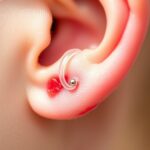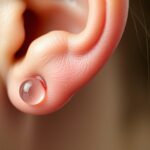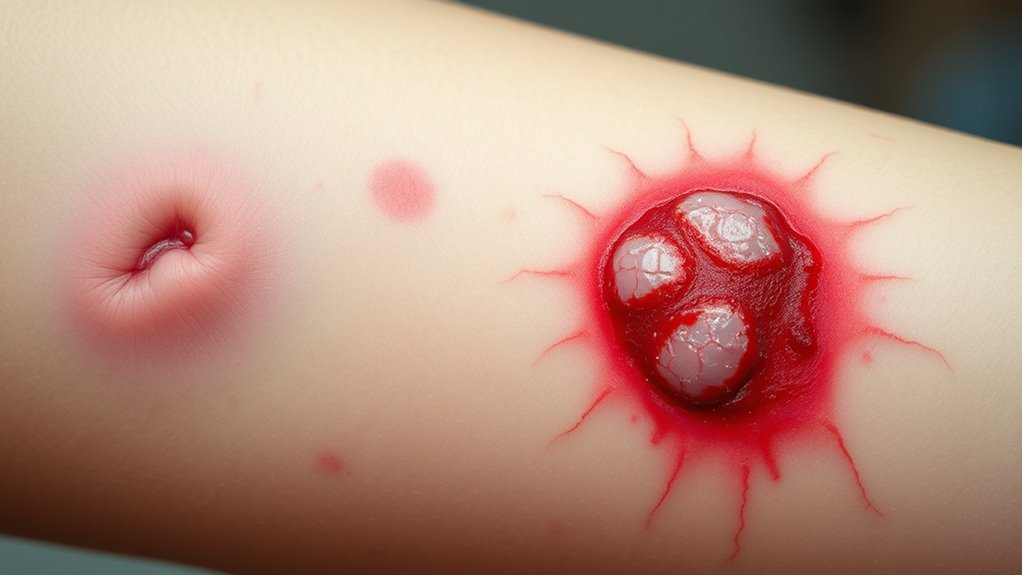

During healing, you’ll notice minor redness, swelling, slight bruising, and mild discomfort, which are normal signs of blood flow and tissue repair. However, watch out for signs of infection like increased pain, swelling, warmth, pus, foul odor, or discoloration changing to dark red, purple, or green. A high fever or systemic symptoms also signal trouble. Staying alert helps make certain of proper recovery—continue exploring so you know exactly what to look for.
Key Takeaways
- Normal healing involves mild redness, swelling, and discoloration that gradually improve, while infection signs include increased pain, pus, and foul odor.
- Discoloration that remains or worsens beyond a few days may indicate infection or tissue necrosis.
- A low-grade fever can be normal during healing; high fever suggests possible infection requiring medical attention.
- Watch for increased warmth, swelling, or spreading redness around the wound as signs of infection.
- Systemic symptoms like chills, fatigue, or worsening discomfort signal potential complications needing prompt care.
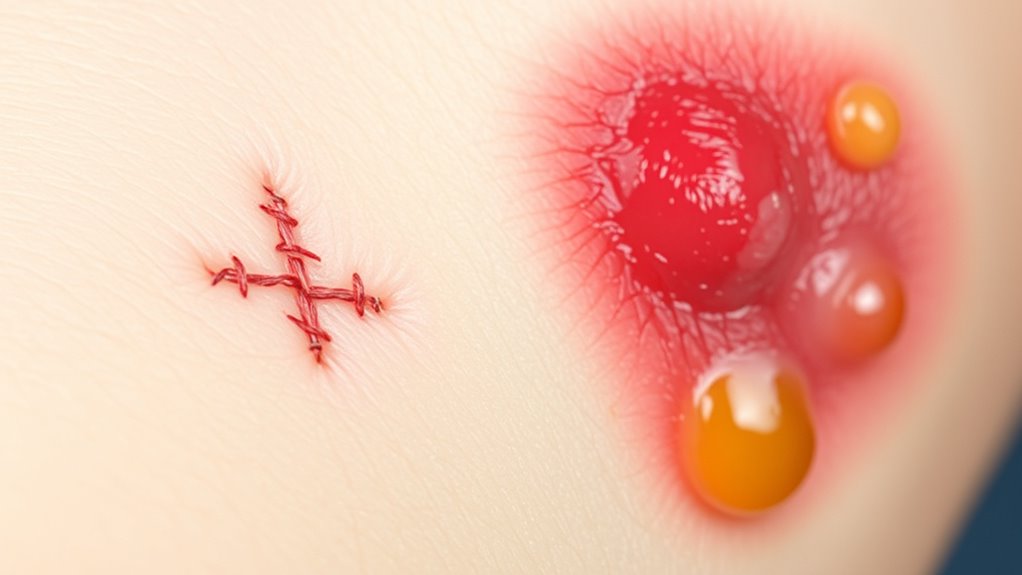
When you’re healing from an injury or surgery, it’s important to recognize the difference between normal healing signs and indications of infection. One of the first things to pay attention to is the appearance of your wound. During the healing process, minor wound discoloration—such as redness or slight bruising—is normal as blood flow increases to the area. However, if you notice the wound turning a dark red, purple, or greenish hue, it could be a sign of infection or tissue necrosis. Discoloration that spreads beyond the wound edges or persists longer than a few days warrants medical attention.
Watch for wound discoloration like dark red, purple, or greenish hues indicating possible infection or tissue death.
Fever symptoms are another key indicator to watch for. A low-grade fever might be a normal response as your body fights off minor irritation, but a persistent or high fever (above 101°F) suggests that your immune system is battling an infection. If you experience chills, sweating, or body aches alongside a fever, it’s even more likely that an infection is developing. These systemic symptoms often accompany localized signs and should not be ignored, as they indicate your body is actively fighting something more serious.
In addition to discoloration and fever symptoms, monitor your wound for other signs of infection. These include increased pain, swelling, warmth around the area, or pus and foul odor. While some swelling and discomfort are expected during healing, worsening pain or spreading swelling can be problematic. Pus, especially if it’s thick, yellow, green, or bloody, is a clear sign that bacteria may be present, and you should seek medical advice promptly.
You should also keep an eye on your overall health and any changes that seem unusual. If you notice your wound becoming more tender, the skin around it turning darker or more swollen, or if you develop systemic symptoms like chills or fatigue, don’t delay seeking care. Sometimes, infections can develop quickly, and early intervention can prevent complications. Additionally, using an air purifier with HEPA filtration can help reduce airborne pathogens that might contribute to infection risk in your environment.
Frequently Asked Questions
How Long Does Typical Healing Take After Surgery?
Healing time after surgery varies, but typically, your wound care routine influences the healing timeline. Most minor surgeries heal within two to three weeks, while more extensive procedures may take several months. During this period, monitor your wound for signs of infection and follow your healthcare provider’s instructions. Proper wound care accelerates healing, reduces complications, and helps you recover comfortably and safely.
Can a Slight Fever Indicate Infection or Normal Healing?
A slight post surgical fever can be normal as your body responds to healing, but it may also be an infection marker. If your fever stays low and is accompanied by mild discomfort, it’s likely part of the healing process. However, if it persists or worsens, or if you notice other signs like increased redness, swelling, or pus, it’s wise to consult your healthcare provider to rule out infection.
What Home Remedies Aid Faster Healing?
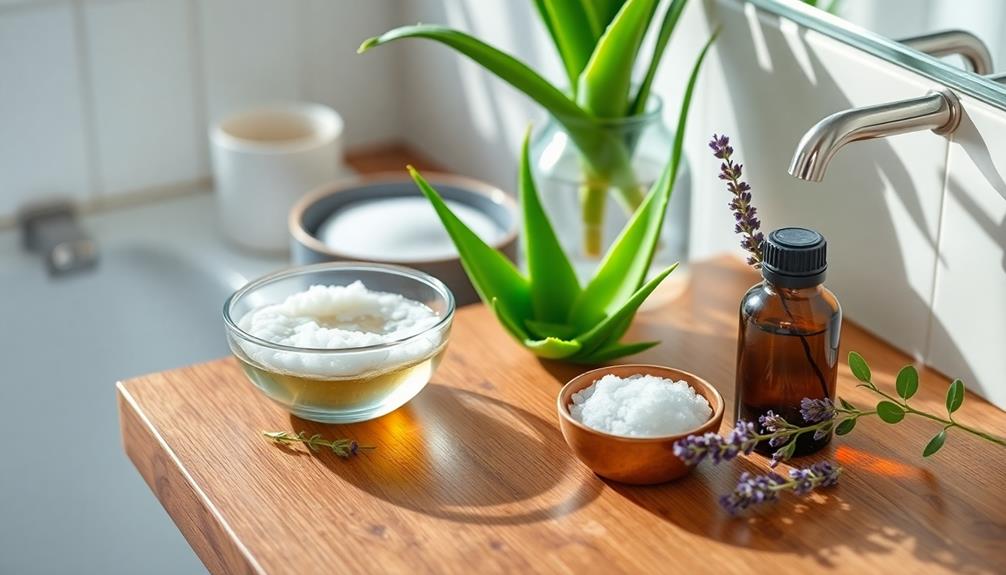
Ever notice how a little honey on a cut seems to work wonders? Home remedies like honey, turmeric, and keeping the wound clean can aid healing acceleration. Applying aloe vera or using warm saltwater rinses also promote faster recovery. Staying well-hydrated and eating nutrient-rich foods boosts your body’s natural healing process. These simple steps, combined with patience, help make certain your wound heals smoothly and more quickly.
When Should I See a Doctor About My Healing Wound?
You should see a doctor if your wound care efforts aren’t improving, or if you notice infection signs like increased redness, swelling, pus, or foul odor. Seek medical help immediately if you experience severe pain, fever, or if the wound isn’t closing. Prompt attention guarantees proper healing and prevents complications. Don’t ignore symptoms that suggest infection—early intervention is key to effective treatment.
How Can I Prevent Infection During Recovery?
Think of your wound as a delicate garden that needs tending. To prevent infection, keep up with wound hygiene by gently cleaning the area and changing dressings as advised. Avoid touching it with dirty hands. If your doctor prescribes antibiotics, take them exactly as directed—they’re your shield against invading bacteria. Staying vigilant and maintaining good hygiene helps your wound heal smoothly, like a garden blossoming in spring.
Conclusion
Remember, your body is like a map guiding you through healing and potential pitfalls. By paying close attention to signs of healing—such as reduced redness and steady pain—and watching out for infection indicators like increased swelling or pus, you can steer clear of complications. Trust your instincts and keep a close eye on your progress. When in doubt, don’t hesitate to reach out to your healthcare provider—your health is the compass that leads you back to wellness.