To maintain your lip and oral piercing, focus on eating soft, non-acidic foods and avoid hot, spicy, or crunchy items that can irritate your piercing. Practice good oral hygiene by rinsing with saline solutions after meals, using a soft toothbrush, and staying hydrated. Make sure your jewelry fits comfortably to prevent trauma or infection. For more tips on keeping your piercing healthy and avoiding complications, keep exploring further.

Get beauty and skincare favorites delivered free with Prime
- Fast, free delivery on millions of items
- Prime Video, Amazon Music and more included
- Member-only deals all year
Key Takeaways
- Use soft, non-acidic foods and stay hydrated to minimize irritation and promote healing.
- Rinse mouth with saline solution multiple times daily, especially after eating or drinking.
- Avoid alcohol-based mouthwashes and harsh oral products to prevent dryness and irritation.
- Ensure jewelry fits snugly but comfortably to prevent tissue damage and reduce infection risk.
- Regularly check for swelling, redness, or discharge and seek professional help if signs of infection occur.
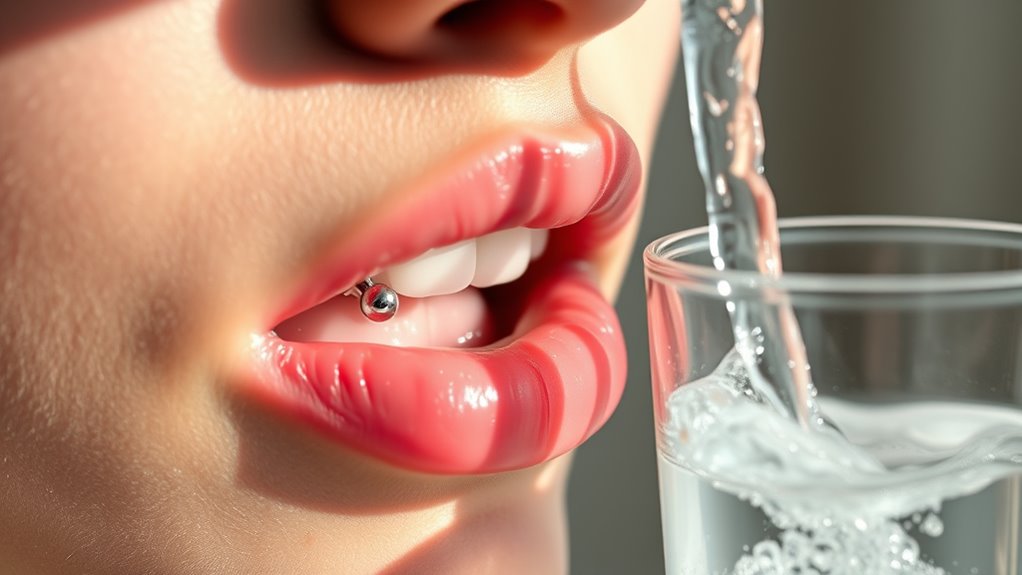
Maintaining lip and oral piercings is essential to guarantee proper healing and prevent infections. When you’re in the healing process, every step you take impacts how smoothly your piercing heals. One of the most important aspects is choosing the right jewelry. The jewelry selection isn’t just about style; it plays a crucial role in minimizing irritation and ensuring comfort. Opt for high-quality, hypoallergenic materials like surgical steel, titanium, or biocompatible plastics. These materials are less likely to cause allergic reactions or lead to complications during the healing process. Avoid cheap or poorly manufactured jewelry, as they can contain impurities or rough edges that may damage your tissue or trap bacteria.
During the healing process, you should be mindful of how your jewelry fits. It needs to be snug enough to stay in place but not so tight that it causes unnecessary pressure or discomfort. When you select jewelry, consider the gauge and length, especially for lip and oral piercings, because these factors influence swelling and overall healing. If your jewelry is too short or too tight, it can cause irritation or even tissue damage, prolonging recovery. Conversely, jewelry that’s too loose might catch on your teeth or gums, leading to injuries or infections. Checking with your piercer for the best jewelry options tailored to your anatomy can help you avoid these issues.
In addition to jewelry selection, your eating habits during the healing process are crucial. Stick to soft, non-acidic foods for the first few days, avoiding anything that could cause trauma or irritation. Hot, spicy, or crunchy foods should be avoided as they can irritate your piercing and increase swelling. Opt for cool, gentle foods like smoothies, yogurt, mashed potatoes, or soups. These not only minimize movement and discomfort but also help keep the area clean. Drinking plenty of water is also vital to stay hydrated, which promotes faster healing. Incorporating proper oral hygiene practices, such as regular rinsing with saline solution and gentle brushing, further supports optimal recovery.
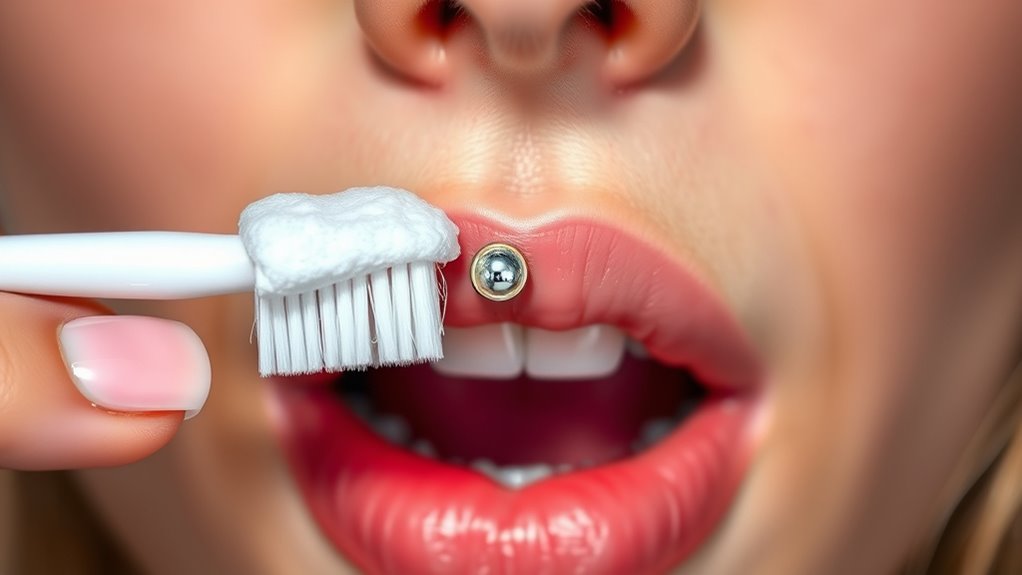
Good oral hygiene is key in maintaining your piercing. Rinse your mouth with a saline solution several times a day, especially after eating or drinking, to keep bacteria at bay. Avoid alcohol-based mouthwashes, which can be too harsh and dry out your mouth, irritating the piercing. Brushing gently with a soft-bristled toothbrush and avoiding the pierced area initially can prevent accidental trauma. If you notice swelling, redness, or discharge, consult your piercer or healthcare provider promptly to address potential infections. Remember, being cautious and attentive to these details helps ensure your lip or oral piercing heals beautifully and remains healthy long-term.
hypoallergenic lip piercing jewelry
As an affiliate, we earn on qualifying purchases.
As an affiliate, we earn on qualifying purchases.
Frequently Asked Questions
How Long Should I Avoid Spicy Foods After Piercing?
You should avoid spicy food for at least the first week after getting your lip or oral piercing. Spicy foods can irritate the healing site and cause discomfort. During the initial healing timeline, it’s best to stick to softer, milder foods. After a week, if your piercing is healing well, you can slowly reintroduce spicy foods, but always listen to your body and consult your piercer if you experience any pain or swelling.
Can I Use Alcohol-Based Mouthwash During Healing?
You shouldn’t use alcohol-based mouthwash during healing because it can irritate your piercing and delay recovery. Instead, opt for gentle alcohol alternatives like saline rinses or a specially formulated piercing cleaning solution. These options help keep your piercing clean without causing unnecessary discomfort. Using alcohol alternatives during healing minimizes irritation and promotes faster healing, ensuring your piercing stays healthy and looks great once fully healed.
When Is It Safe to Change My Piercing Jewelry?
You should wait until your healing timeline is complete before changing your piercing jewelry, typically around 6 to 8 weeks for lips. During this period, your body is healing, and premature jewelry replacement can cause irritation or infection. Once your piercer confirms healing is complete, you can proceed with jewelry replacement. Always follow your piercer’s advice and avoid rushing the process to make certain of proper healing and avoid complications.
Are There Specific Toothpaste Types Recommended for Healing?
Think of your healing process as tending a delicate garden—you want gentle care. When choosing toothpaste, look for ones with mild ingredients like fluoride and avoid harsh chemicals or whitening agents. Using a toothpaste with soothing ingredients helps maintain your oral hygiene tips and supports healing. Stick to soft-bristled brushes, rinse with saline, and avoid irritants. This gentle approach keeps your piercing happy and promotes smooth healing.
How Do I Prevent Bacteria Build-Up on My Jewelry?
To prevent bacteria build-up on your jewelry, you should regularly practice piercing cleaning with a gentle, antiseptic solution recommended by your piercer. Avoid touching your jewelry with dirty hands, and rinse your mouth after eating or drinking to minimize bacteria. Swirl saline solutions around your piercing daily. These steps help with bacteria prevention and keep your jewelry clean, promoting faster healing and reducing the risk of infection.
Conclusion
Taking care of your lip and oral piercings is like tending a delicate garden inside your mouth. Keep the area clean, avoid irritating foods, and stay mindful of your hygiene routine. Imagine the gentle glow of healing, like a soft sunrise, shining brighter with each careful step you take. By maintaining your piercing, you’re nurturing not just your body but your confidence—allowing your radiant smile to bloom freely, vibrant and healthy every day.
Halloween Picks
halloween
As an affiliate, we earn on qualifying purchases.