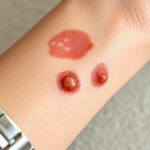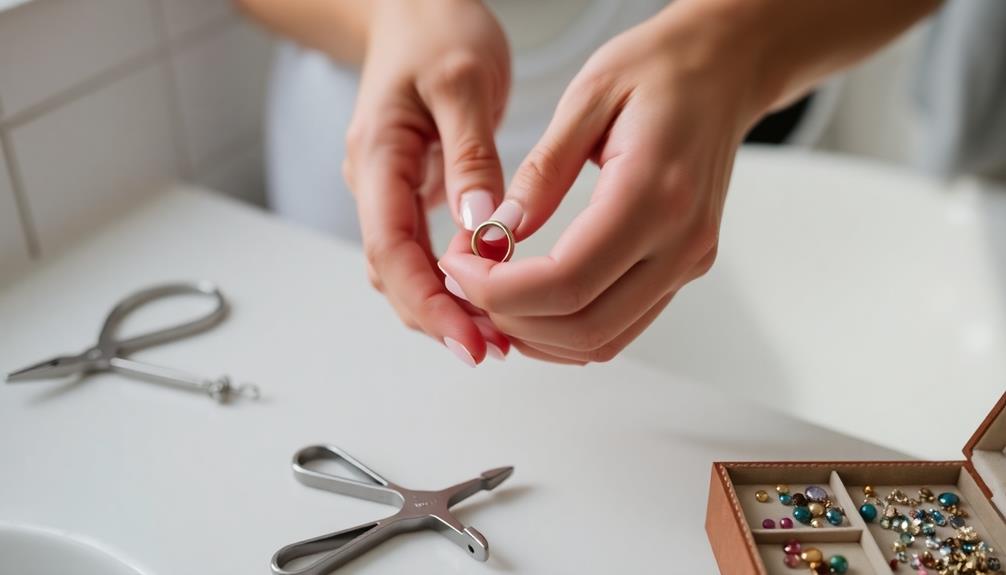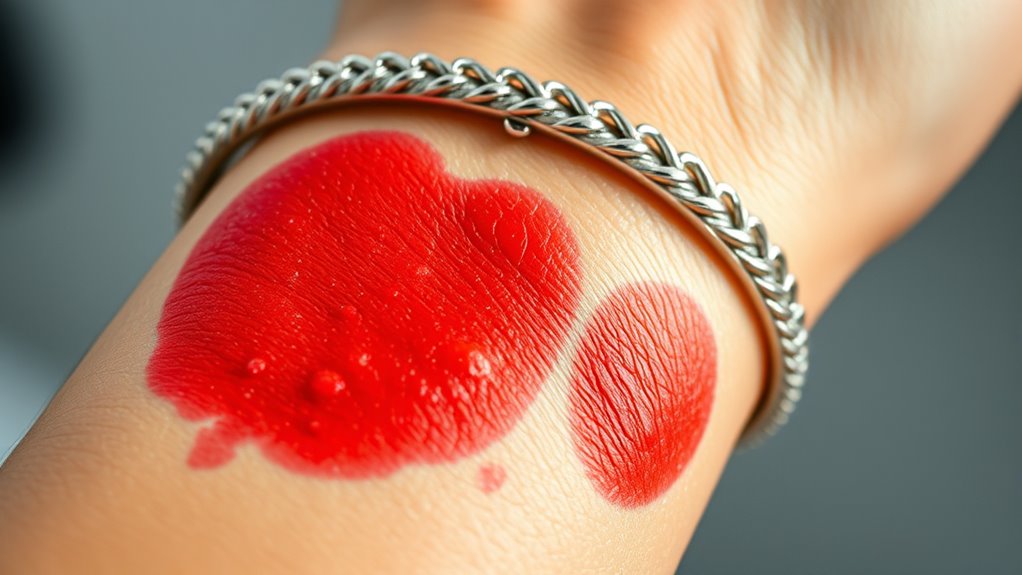

If you develop redness, itching, or swelling after wearing jewelry, it’s often caused by allergens like nickel commonly found in jewelry materials. Choosing hypoallergenic options, such as stainless steel, titanium, or nickel-free gold, can help prevent reactions. You can also test for specific allergies or apply a protective coating on jewelry. If irritation persists, removing the jewelry and seeking professional advice will help, and you’ll discover more ways to protect your skin further.
Key Takeaways
- Nickel allergy is a common cause of jewelry-related skin reactions, often without initial awareness.
- Using hypoallergenic materials like surgical stainless steel, titanium, or nickel-free gold reduces allergy risk.
- Allergy testing helps identify specific triggers, enabling better avoidance and safer jewelry choices.
- Applying clear nail polish or choosing jewelry labeled as hypoallergenic can prevent irritation.
- Promptly removing jewelry and consulting a dermatologist helps manage and treat allergic reactions effectively.
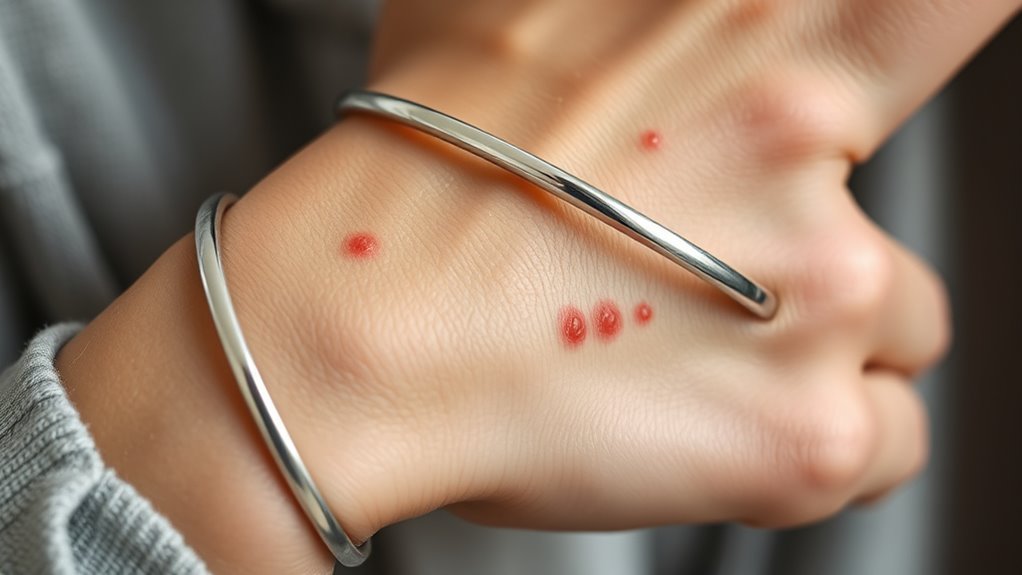
Many people develop allergic reactions to jewelry, often without realizing that certain materials can cause skin irritation or rashes. If you notice redness, itching, or swelling after wearing jewelry, it might be due to an allergic response. One way to prevent these reactions is to choose jewelry made from hypoallergenic materials. These materials are specifically designed to minimize the risk of allergic reactions because they contain fewer or no common allergens like nickel, a frequent culprit in jewelry allergies. Common hypoallergenic options include surgical-grade stainless steel, titanium, niobium, and certain types of gold that are alloyed without nickel. Switching to jewelry made from these materials can considerably reduce irritation and make wearing accessories more comfortable. Additionally, being aware of material composition can help you make more informed choices and avoid allergens altogether.
However, identifying the exact cause of your allergy can sometimes be tricky. If you’re unsure whether a particular material is causing your skin reaction, allergy testing can be very helpful. Allergy testing, usually performed by dermatologists or allergists, involves exposing your skin to small amounts of potential allergens to observe any reactions. Patch testing is a common method used to determine if you’re allergic to specific metals, such as nickel or cobalt, which are often found in standard jewelry. This testing helps you identify the specific substances triggering your allergy, enabling you to make informed choices about which jewelry materials to avoid.
Once you know what causes your allergic reactions, you can take more precise steps to protect yourself. Always read labels or ask jewelry sellers about the materials used before making a purchase. Opt for pieces that are labeled as hypoallergenic or nickel-free, especially if you’ve had previous reactions. For jewelry you already own and suspect might be causing irritation, consider having it tested or simply avoid wearing it altogether. When in doubt, you can also coat jewelry with a clear nail polish to create a barrier between your skin and the metal, though this is a temporary solution and might need reapplication.
In addition to choosing the right materials, proper jewelry care is essential. Keep your jewelry clean and dry, as dirt and moisture can exacerbate allergic reactions. When you notice irritation, remove the jewelry promptly and give your skin time to heal. If you experience persistent symptoms, consult a dermatologist for personalized advice and treatment options. Ultimately, understanding the materials your skin reacts to and using allergy testing as a guide allows you to enjoy jewelry without discomfort, making your accessories both beautiful and safe to wear.
Frequently Asked Questions
How Can I Tell if I Have a Jewelry Allergy?
You can tell if you have a jewelry allergy by noticing signs like contact dermatitis, which causes redness, itching, or swelling where your skin touches jewelry. If your skin is particularly sensitive, you might experience these symptoms quickly after wearing certain pieces. To be sure, test with hypoallergenic jewelry or consult a dermatologist. Pay attention to how your skin reacts, especially if you develop irritation or rashes after wearing jewelry.
Are There Specific Metals More Likely to Cause Allergies?
Nickel sensitivity is the most common culprit behind jewelry allergies, and it’s more widespread than you might think. Metals like nickel, cobalt, and chromium are more likely to cause reactions, especially if you have sensitive skin. To be sure, get metal testing done. This simple step can save you from the misery of allergic reactions and help you choose jewelry that won’t irritate your skin, keeping you comfortable and confident.
Can Allergy Symptoms Develop After Years of Wearing Jewelry?
Yes, allergy symptoms can develop after years of wearing jewelry. Late onset allergies happen when your immune system gradually becomes sensitive to metals you’ve worn for a long time. Metal sensitivity can develop unexpectedly, causing skin reactions even if you’ve previously worn jewelry without issues. If you notice new symptoms, consider switching to hypoallergenic pieces or removing suspect jewelry to prevent further irritation.
Are Hypoallergenic Jewelry Options Truly Safe for Sensitive Skin?
Did you know that over 15% of people report jewelry allergies? Hypoallergenic jewelry options are generally safe, but they aren’t foolproof. To guarantee they won’t cause a reaction, you should perform allergy testing and regularly clean your jewelry. Proper jewelry cleaning removes irritants, and allergy testing confirms if the materials are safe for your sensitive skin. Always choose reputable brands and consider consulting a dermatologist for personalized advice.
How Do I Differentiate Between Allergic Reactions and Skin Irritation?
You can tell the difference between allergic reactions and skin irritation by observing your skin’s reaction. Allergic contact dermatitis usually causes itching, redness, swelling, and sometimes blisters that develop after exposure to jewelry with allergens. Skin sensitivity might lead to mild redness or irritation but typically lacks swelling or blisters. If symptoms persist or worsen, it’s wise to see a dermatologist to determine if you’re experiencing an allergy or irritation.
Conclusion
If you experience allergic reactions to jewelry, don’t ignore the signs. Switching to hypoallergenic options or testing new pieces before wearing them can make a big difference. Did you know that about 17% of people are allergic to nickel, one of the most common jewelry allergens? By understanding the causes and taking simple precautions, you can enjoy your jewelry without discomfort. Protect your skin and keep your accessories stylish and safe!